

Hard water isn’t dirty or contaminated water; it’s just water with invisible dissolved minerals. That’s why the borewell or tanker water is always hard, and the municipal water is usually soft, because it hasn’t sat deep inside the mineral-rich rocks.
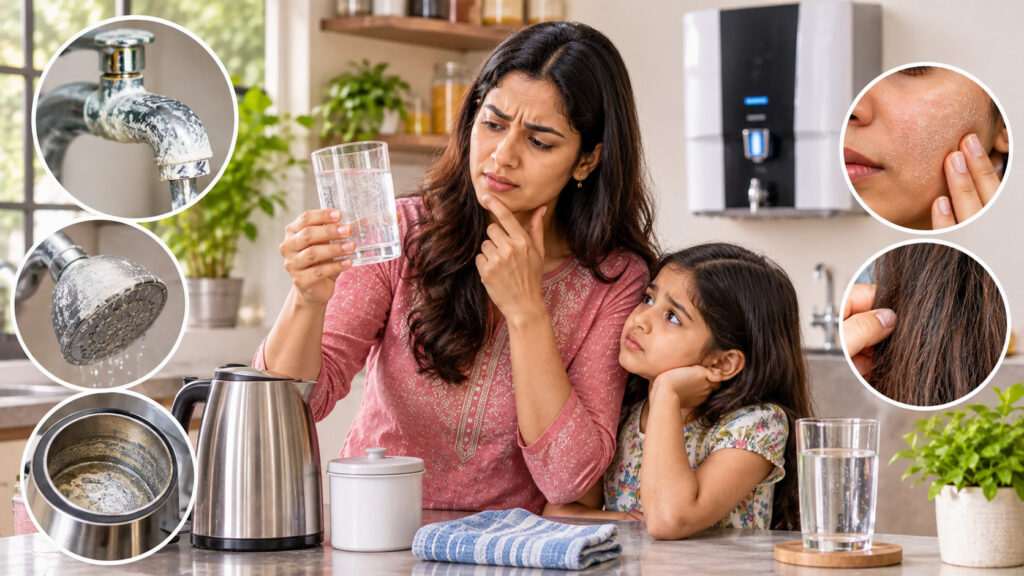
As a result, the minerals in your water form a white crust on taps, geysers or kettles because when the water heats up, calcium and magnesium are left behind, which then turns into limescale over time. Besides, hard water also never lets soap lather.
Now, hard water has two types- the easy kind (Temporary hardness) and the stubborn kind (permanent hardness). While you can remove hardness from water simply by boiling when it’s temporary, you need a water softener, an RO purifier or chemical treatment for the latter.
Also Read: Do You Need a Water Softener With a Home Purifier?
What Is Hard Water? Causes and Types
Hard water is regular water with high amounts of dissolved minerals, mostly calcium and magnesium and smaller amounts of other dissolved ions and salts like bicarbonates, sulfates and chlorides and trace minerals.
What causes this? Water slowly travels underground through layers of soil and mineral-rich rocks—especially limestone and chalk—slowly dissolving tiny bits of them along the way. As it passes through, those rocks release calcium and magnesium minerals (like bicarbonates, sulfates, and chlorides) into the water. This is why borewells and open wells have hard water: the water comes from deep underground, where it has been sitting inside rock beds for a long time, packing the underground water with dissolved minerals. In fact, river or lake water is much softer because it mostly stays on the surface.
| Type of Hard Water | What Causes It | How to Fix It |
| Temporary Hardness | Calcium and magnesium bicarbonates | Boil the water. |
| Permanent Hardness | Sulfates and chlorides of calcium and magnesium (CaCl2, MgCl2, CaSO4, MgSO4) | Boiling won’t work. You need a water softener, an RO purifier, or chemical treatment to remove them. |
Quick Insight: As per the Indian drinking water rules, 200 mg/L is the acceptable limit and 600mg/l is the maximum permissible limit for total hardness in terms of drinking water.
Similarly, for daily household use, water is considered soft (o-60mg/L), moderately hard (61-120mg/L), hard (121-180 mg/), and very hard (above 180 mg/L).
Also Read: Do You Need an RO Water Purifier for Borewells in Delhi?
Health and Home Impact of Hard Water
Let me clear up a misconception for you. Hard water can be hard on appliances and pipes. However, it has no adverse health effects and is safe to drink if consumed within the permissible limit. In fact, it adds a boost of calcium and magnesium to your daily intake.
How It Affects Your Health (Inside vs. Outside)
- Inside (Drinking): According to WHO guidelines, hard water supplies roughly 5% to 20% of your daily calcium and magnesium needs, supporting bone and heart health—though extremely high mineral levels can cause mild stomach discomfort.
- Outside (Bathing): As noted in an NIH health review, hard water reacts with soap to leave a thin film on your body, clogging pores and causing dry, itchy skin, rough hair, and hair fall.
How It Affects Your Home (Pipes, Machines & Bills)
- Bathrooms, Kitchens & Laundry: It will leave chalky white stains and sticky soap scum on your taps, tiles, and glassware, and make the washed clothes stiff and faded.
- Appliances (Geysers, Washing Machines & Kettles): Coats heating rods in white crust, which in turn hikes the electricity bills, wears out machines early, and forces you to use extra detergent.
- Plumbing & Pipes: White mineral crust sticks to the inside of pipes and blocks showerhead holes—slowing down water flow and leading to costly plumber repairs.
How to Tell If Your Water Is Hard?
It’s not likely to differentiate between hard water and soft water just by looking at it, but when looked at more closely, your home leaves clear signs:
- Stains in sink and tub
- Clothes wear out easily
- Dull colours of clothes
- White, chalky residue on dishes and pipes
- Dry skin and dry hair
- Hard water will not form lather with soap.
Here is how you can test the hardness of water at home:
- Soap test: Take a clean plastic bottle and fill it halfway with tap water, add a few drops of liquid soap and shake. If you see cloudy foam that disappears fast, it means the water is hard.
- Boiling Test: Fill a clean pot with tap water and bring it to a boil for a few minutes. After that, let it cool. If you see white, chalky deposits at the bottom, it means the water is hard.
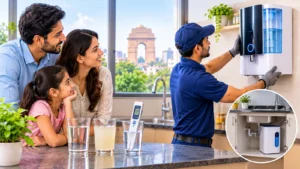
- Test Kits: Buy a water hardness kit online or from a store. Dip the test strip into the tap water and look for the colour change. Read the instructions on the box to know the exact hardness level.
Also Read: Drinking Hard Water in Delhi? Find Out What Happens
How to Remove Hardness from Water? Different Ways
The hard water that you consume or use can be either permanent or temporary. Where both types leave chalky scale on taps, ruin soap lather, and wear out appliances, temporary hard water becomes soft when boiled, while permanent hard water needs a proper filter or softener, as boiling doesn’t work.
However, the solution to remove hardness from water is not limited to installing a system; there are some home remedies that one can follow for hardness removal.
How to Remove Hardness from Water at Home
- Drinking water: Temporary hardness of water can be removed by boiling water. You can do this in batches and, once boiled, let it cool. The clear water is at the top, and the white flakes settle at the bottom. On the other hand,permanent hardness of water can be removed by installing an RO water purifier, which filters out the dissolved minerals and salts. Moreover, hard water can clog the RO membranes, which requires regular servicing. You can opt out of the hassle of regular servicing by renting RO and RO+UV+UF water purifiers through Rentomojo with free filter replacement every 6 months based on the model you choose.
- Bathing and geysers: Install a shower filter and provide ease to dry skin and hair fall. It reduces chlorine and minerals, though it won’t fully soften water. Also, flush your geyser regularly to clear the settled mineral buildup.
- Laundry and dishes: Use baking soda, washing soda, or laundry conditioners with your detergent to boost lather, reduce soap scum, improve fabric texture and remove stains from utensils.
- Cleaning white stains: Vinegar’s mild acidity helps break down the buildup on taps, showerheads, tiles, and kettles. However, it’s not a hard water-to-soft water converter.
Finally, if you want a continuous fix for your whole home, install an ion-exchange water softener, which removes calcium and magnesium at the source.
How to Remove Permanent Hardness of Water
Permanent hardness of water can be removed by four proven methods:
- Washing soda: Mixing washing soda into hard water will turn the dissolved calcium and magnesium into solid flakes that settle at the bottom, leaving soft water on top.
- Calgon’s method: When you add Calgon powder into water, it wraps around calcium and magnesium particles like magnets and restrains them from forming a crusty scale on pipes or heating rods.
- Gan’s permutit method: You put zeolite sand in the tank, and when the hard water goes through it, the sand traps the hard calcium and magnesium and releases harmless sodium. Soft water comes out of the bottom.
- Ion-exchange resins: You place specially coated plastic resin beads in the tank, and they trap hard calcium and magnesium and swap them with sodium. In addition, the unit connects to your home’s main water pipe and every few days flushes salt water to clean the beads.
(Note: Clark’s method removes temporary hardness only and is not suitable for permanent hardness.)
And for the permanent fix for your home, make sure that you use a water softener for bathing and appliances and an RO purifier in the kitchen. Softened water contains extra sodium; therefore, avoid drinking it straight. Moreover, a softener lasts for a good 8 to 15 years, with regular salt refills, resin checks and servicing. All you need to do is pick the right size as per your daily use, test the water hardness and the water source.
Don’t fall for the magnetic or electronic pipe gadgets, as they don’t really remove hard minerals.
Limescale Buildup and Hard Water Mineral Deposits: How to Clean Them?
Limescale buildup and hard water mineral deposits on your taps, kettles, tiles and buckets are the result of minerals left behind when the hard water is heated up or dries out. Each spot needs a slightly different quick fix:
- Hard water stains in kettle: Take equal parts of water and vinegar or citric acid and oil it. Let it sit for 20 minutes and then rinse well.
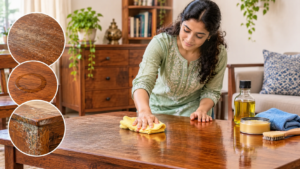
- Water spots on taps, tiles, and glass: Dilute vinegar or lemon juice and wipe the taps, tiles and glass. Afterwards, buff dry it so that no new spots are formed.
- Borewell water stain remover for bathrooms and buckets: Make a paste of vinegar and baking soda and scrub it all over the white scale. Use an acid-based bathroom cleaner to remove the reddish-orange iron stains. Avoid mixing bleach at all costs.
Conclusion
Even though there is no evidence to back the claim that hard water has no adverse effect on health, it does damage appliances and plumbing, and causes skin irritation and hair loss. With the hardness removal solutions for the home discussed above, you can still improve the quality of your water. Having said that, temporary fixes are not going to last long. If you reside in an area where the water supply is from groundwater or a borewell, you should take steps to remove hardness from water. Invest in a permanent solution and install a properly sized water softener system with an RO purifier, or skip the upfront cost by renting a RO + UV + UF + TDS + Alkaline + Copper from Rentomojo starting at ₹391/month on a 36-month plan with free scheduled maintenance.
Frequently Asked Questions
1. What works best as a borewell water stain remover?
You can use white vinegar or baking soda paste for the light mineral spots and citric acid or commercial limescale descaler for the thick chalky stain.
2. How to filter hard water for drinking?
Install an RO (Reverse Osmosis) water purifier. It filters out the dissolved calcium, magnesium, and excess salts and makes the water safe for drinking.
3. How to get rid of hardness in water permanently?
A whole-house ion exchange water softener with an RO water purifier is the permanent solution.
4. Will a water softener increase water or electricity usage?
Not much. It uses very little electricity to run its digital timer and a small amount of water to clean itself. If you actually look, you will end up saving on your geyser and washing machine, which work smoothly with fewer repairs.
5. Does vinegar soften hard water?
No. Its mild acidity breaks down existing limescale buildup and cleans the taps, kettles, and showerheads. It works well when added during the laundry rinse to wash out soap scum.