


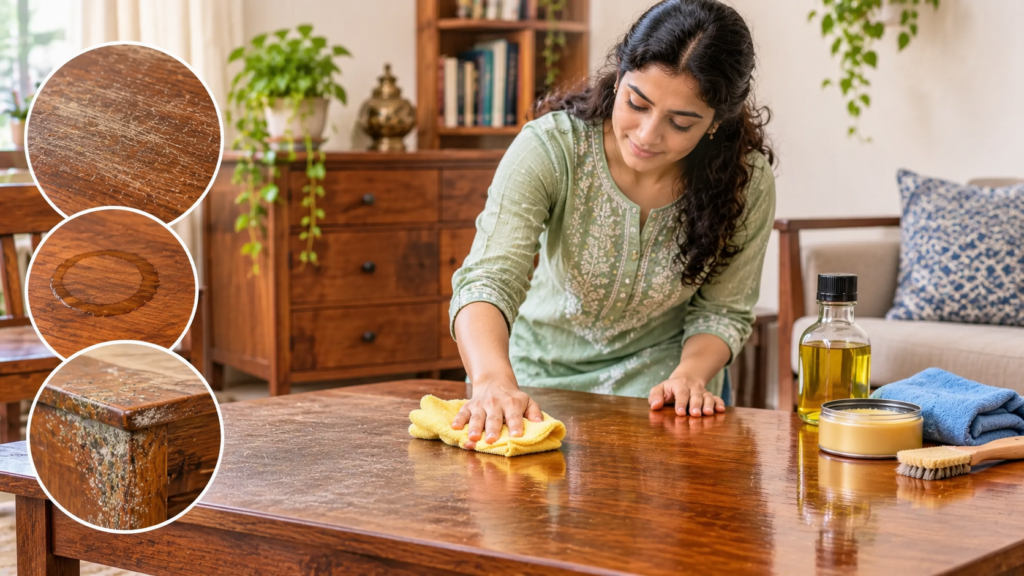
Wooden furniture is a legacy that is passed down through generations. However, spills, regular wear and Indian weather conditions like monsoon humidity, dust, and sunlight can make even the finest piece lose its charm over time. Wood polishing is an art to preserve that legacy by choosing the right wood furniture polish and coating every piece of the furniture correctly and evenly to uphold the timeless piece for a long haul.
In this guide, we will talk about furniture care and how to polish wood furniture at home, whether you own it or rent it.
Also Read: How Does Furniture Rental Work in India? A Complete Guide!
Before You Polish: What Dulls Wood and What Surface You Have?
Every household owns wood furniture made of oak, sheesham, teak, acacia or solid wood, whether it’s your dining table, coffee table, wardrobe or even your library. Every wood reacts differently when exposed to the Indian weather conditions, and this is why wood polishing matters. It does much more than improve the appearance; it forms a protective layer against scratches and moisture, brings out the natural colour and grain, and prevents cracking and fading.
Why Wood Furniture Loses Its Shine?
Wood is a natural living material, and that’s why it responds to environmental changes around it. But what’s crucial to understand here is that not all wooden furniture needs to be treated the same way, as it has different textures and the presence of natural oils gives it a protective finish. Over time, your cleaning habits, everyday use and exposure to weather conditions can gradually break them. So, it rarely loses its shine for just one reason.
- Dust and Debris: Household dust from soil, fabric fibres, pollution, skin cells, airborne debris, kitchen oils, air conditioners.
- Sunlight: Long-term exposure to direct sunlight; UV rays degrade the wood surface.
- Moisture: Wood naturally absorbs and loses moisture throughout the seasonal changes, causing the furniture to stain, swell or warp.
- Improper cleaning habits: Use of harsh chemicals and rough sponges strips the protective layer of any wood.
And believe it or not, wood furniture does tell you about its condition, and here is how you can read the signs:
- Surface looks dull or faded
- Wood feels rough or dry
- Dust sticks to the surface quickly
- Uneven colour
How to Polish Wood Furniture at Home: Step-by-Step.
It’s imperative to know that different woods need different maintenance, so essentially, choosing the right type of wood polish to clean the wood furniture is the very first step of furniture care. If you are wondering about the types of wood that can be polished, then let me help you out with the fact that most woods, including hardwood, softwood and veneers, can be polished.
Make sure to follow these steps to know how to polish wood furniture at home:
Step 1. Don’t start directly with furniture polish at home; make sure to clean and dust the furniture with a dry microfiber cloth and a soft brush for the joints. Then clean the surface gently with mild soap and warm water, followed by letting the surface dry fully before applying the polish.
Step 2. Always choose the right polish type based on your furniture’s wood type and finish. It’s always a better idea to read the back label or do a quick patch test around the hidden corners.
Step 3. The next step is to evenly apply the wood polish in light, circular motions using a lint-free cloth. Make sure that you take a small amount of the polish and not overdo it. Always read the manufacturer’s instructions at the back of the label.
Step 4. Once the polish is dry and the wood has absorbed the polish, take a clean microfiber cloth and gently buff the surface to remove any excess product. Make sure to continue buffing until the surface seems smooth and has its shine back.
What Are the Types of Wood Polish and How Long Do They Last?
| Finish | Appearance | Durability | Maintenance |
| PU Wood Polish | Matte, satin or high gloss | Excellent | Low |
| Melamine Polish | Smooth satin or semi-gloss | Good | Low |
| Varnish | Gloss, satin or matte | Good | Moderate |
| Shellac | Warm natural shine | Moderate | Moderate |
| Oil-Based Polish | Natural, rich finish | Moderate | Regular upkeep |
| Wax-Based Polish | Soft sheen | Moderate | Regular reapplication |
Oil-based polish works best on wooden furniture that looks dry and faded, and opt for wax-based polish if you want that shine and protective layer to stay intact. But if you are looking for chemical-free solutions, go with natural oils and beeswax.
Overdoing anything is always harmful. There are some common mistakes that are worth avoiding:
- Directly applying the polish onto the wood.
- Using or applying too much wood polish.
- Skipping dusting the wood before polishing to remove the dust layer.
- Not buffing the wood polish.
- Using harsh cleaners and rough cloths.
- Ignoring wood type compatibility.
How to Polish Naturally at Home?
We live in a time where everyone prefers organic and natural wood polishes as they are safer for families, kinder to the environment and affordable.
If you are curious to know how to clean wooden furniture at home, here are some homemade solutions to polish wood furniture:
- Olive oil and vinegar: Mix 1 cup of olive oil with ¼ cup of white vinegar.
- Oil and lemon juice: Mix 2 parts olive or coconut oil with 1 part lemon juice.
- Beeswax: It’s an effective homemade wood polish, and it forms a protective layer.
- Tea: Wipe the wooden surface with a strong black tea once it’s cool.
These DIY hacks are fine for a quick fix; however, for lasting protection, always opt for store-bought or professional wood polishes.
How to Fix Common Wood Furniture Problems?
Wood is porous in nature and has an affinity to retain moisture from its surroundings; it attracts mold and fungi. It happens when wood loses its protective sealant and absorbs moisture, which then rots, and you can see black, green or white mold on the wood.
How to Remove Mold and Fungus from Wood?
There are many ways to kill or remove the mold, but let me make you aware of the fact that it’s not always DIY safe and it’s advisable to call a professional if the mold is more than 10 square feet.
Here are the steps that you can follow for cleaning mold off the wood:
- Always wear N95 masks, gloves and safety goggles before starting the mold removal process.
- First, use a scrub brush, dish soap and water to remove all the excess mold and fungus that you can. You can also vacuum with HEPA filters. Avoid bleach at any cost if you don’t like your furniture discoloured.
- Use baking soda, white vinegar, dish soap and water to scrub the mold off the surface. Optional, but you can also use sand for stubborn molds.
- Always use fans and dehumidifiers to dry the wood completely before repainting it.
- Apply a fresh coating of mold-resistant paint to protect the cleaned surface.
How to Remove Water Stains and White Marks?
Often you see white marks or cloudy rings on your wooden furniture, which means moisture is trapped in the top polish layer or dark or black water stains when the water penetrates deep down into the raw wood.
At home remedies on how to remove water marks from wood or water stains:
- Gently apply a mix of baking soda and non-gel toothpaste.
- Dab a small layer of mayonnaise or petroleum jelly overnight.
- Hairdryer at low or medium heat, held 6-8 inches away from the water mark, also works. Make sure that you buff the area with a dry cloth and apply a light layer of wood polish.
- Take a dry cotton cloth, with no prints, and place it over the white stain. Set the iron on low heat and press gently for 3-5 seconds until the stain disappears.
At home remedies on how to remove water stains from wood:
- Gently rub a mix of white vinegar and olive oil with a soft cloth.
- Superfine steel wool dipped in lemon or mineral oil, lightly rubbed over the stain, also helps.
- Using fine sandpaper, strip off the old finish from the stained area and apply oxalic acid wood bleach. Once dry, buff it and apply the wood polish.
Regular maintenance extends the lifespan of your wooden furniture. Regular dusting, wiping immediately after a spill, using coasters for hot dishes and drinks, good indoor ventilation and no exposure to direct sunlight are some of the regular habits that can help.
When Polishing Isn’t Enough?
At times, when the damage is deeper than a surface shine for reasons like deep scratches, peeling or flaking, termites, sticky buildup, dark water stains and more, polishing the wood furniture isn’t enough.
Restoration beyond polishing would mean stripping the old finish, filling cracks, re-varnishing, or re-laminating the entire furniture. Now you can do this for heirloom furniture, but if you are someone who frequently moves cities or lives in a rented flat, this is a lot of hassle and expense to go through. Instead, bringing the furniture on rent seems like a practical answer.
Rentomojo offers well-maintained, ready-to-use wooden beds, dining tables, wardrobes, study tables, centre tables, and chests of drawers made of engineered wood on easy monthly subscriptions. You can choose how long you want to rent the furniture by opting for 3,6,11,12,21 and 36 months, with free maintenance and relocation covered in the plan you choose. All you have to do is choose the tenure, the type of furniture and drop the hassle of how to polish wood furniture at home.
Also Read: Renting Furniture Helps You Live Sustainably: 5 Reasons Why
Frequently Asked Questions
1. Can I make furniture polish at home?
Yes, homemade wood polish like vinegar, olive oil, lemon juice and beeswax is useful.
2. What is the difference between wax polish and oil polish?
Both are the most used types of wood polish. Oil polish goes deep into the wood and nourishes it, whereas wax polish sits on the surface level and forms a protective layer.
3. Is vinegar safe on polished wood furniture?
Only if diluted heavily with water. It’s acidic in nature, which strips away the shine of the furniture. It’s recommended to do a patch test first.
4. How often should I polish and maintain wood furniture in Indian weather?
In Indian weather conditions, it’s recommended to polish your wood furniture every 4-6 months, with regular dusting and cleaning. It’s ideal right before or after the monsoon.
5. Can you use wood polish on engineered wood or laminated furniture?
No. Traditional oils and waxes are ideal for solid wood and veneers. For engineered wood furniture, it’s ideal to wipe with a dry microfiber cloth.
6. Can rented wooden furniture be polished at home?
It’s not recommended, as DIY polishing can affect the quality check at return. You can do regular dusting instead. When you rent through Rentomojo, you can raise a repair or maintenance request, and the in-house team will take care of your furniture.
Conclusion
Wood is naturally beautiful and requires consistent care and maintenance. Wood polishing is an easy process and requires no special tools or skills. Just make sure that you know what type of polish to use for your furniture type and material, and when done correctly, you can preserve its appearance and durability for a long time.