

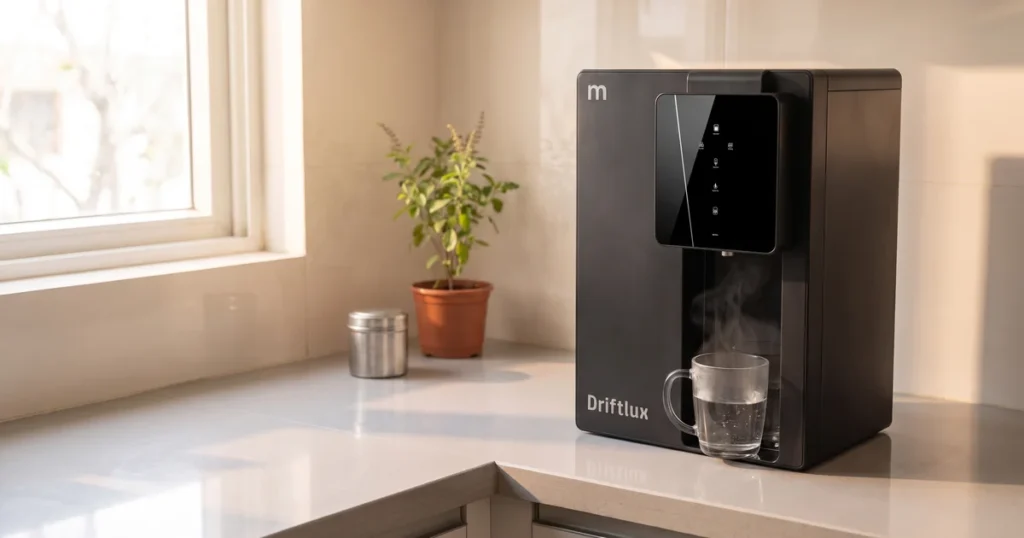
Summary: Hot and cold water purifiers are useful in the cold months of Delhi. The water purifier has heats the regular temperature water and keeps it in a separate tank. The cooling compressor chills the water. Rentomojo’s Driftlux features hot and normal water; the plans start at ₹822/mo on a 36-month plan.
Imagine getting out of bed on Delhi’s shivery cold nights when the temperature drops below 10°C. You would like to squash the idea altogether – but what if your water purifier dispenses hot water? The convenience of getting instant hot water is unmatched. This is where a hot and cold water purifier in Delhi seems like a boon. If you are considering upgrading your RO purifier, a water purifier with hot and cold water is a good fit. To ensure you are investing in the right technology, here’s everything you need to know.
Go for it: You drink coffee or tea several times a day; you already need an RO; your kitchen space is cramped for an electric kettle; you do not want the hassle of boiling water.
Skip it: You find the maintenance overwhelming, and you are worried about the spike in electricity bills.
Also Read: Do You Need an RO Water Purifier for Borewells in Delhi?
How Does a Hot and Cold Water Purifier Work?
A hot and cold purifier starts working by purifying the water. If it is a multi-stage RO purifier, the unit removes dissolved salts, microbes, and germs. Then it stores the purified water in a tank. A small tank with a heating element draws from the main tank. For cold water, the unit has a compressor-cooled tank. These purifiers have a touch panel or separate taps.
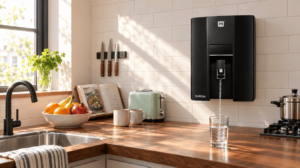
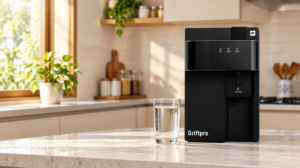
For example, Rentomojo’s DriftLux features touch dispensing for ambient, warm, or cold water. It has an 8.5L storage tank and triple-layer purification for high-TDS water.
Does a Hot and Cold Purifier Cause High Electricity Usage?
Yes, a hot-and-cold water purifier has a built-in heater or water dispenser, which can increase your electricity bill. A regular water purifier uses 30-100 watts, but a hot and cold water purifier draws around 500-1,500+ watts.
Usage stays low when you use cold water. The noticeable spike mainly comes from the heating element. In winter, it is hard to turn off the warm water option. Keep the filters clean so the fan doesn’t overwork and draw extra power.
For Delhi homes: The electricity bills are likely to be high in winter. When water sits at 15°C, it takes 30% more energy to heat it to 30°C.
Hot and Cold Water Purifier vs. a Regular RO: What’s the Difference?
The compressor is the main differentiating component. A hot and cold purifier provides hot water, typically 80°C-90°C. It features an additional storage tank, heating element, and a cooling compressor. A standard RO water purifier includes only a pump, filters, and a tank.
| Feature | Hot and Cold Water Purifier | Regular RO Purifier |
| Temperature Settings | Dispenses hot (80°C–90°C), cold (15°C–20°C), and ambient water. | Dispenses only ambient (room temperature) water. |
| Extra Internal Parts | Includes heating elements, cooling compressors, and extra tanks. | Includes only a standard water pump, filters, and one tank. |
| Storage Setup | Uses separate insulated tanks (often stainless steel for hot water). | Uses a single plastic or steel tank for room temperature water. |
| Power Needs | Uses more power to keep water hot and cold all day. | Uses very little power just to run the pump during filtration. |
| Yearly Service | Costs more if the compressor or heating coil breaks down. | Costs less because it only needs regular filter changes. |
| Best Used For | Instant tea, coffee, baby formula, or quick cold drinks. | Simple, clean daily drinking water. |
Do You Need a Hot Water Purifier in Delhi?
In Delhi, the average minimum temperature is 7°C in January, 25°C in May, 27.7°C in June, and 8.4°C in December. A hot and cold RO water purifier eliminates the need for manual effort. The unit combines multi-stage RO technology and the functionality of a kettle.
The hot and cold water purifier pays off when you already need purification and the hot or cold water is an added bonus. First, decide whether you need an RO, RO+UV, or UV+UF purifier.
Does it pay off? If you use hot water several times a day, a hot water tank is useful. Drinking normal water at night in winter isn’t pleasant. The warm setting solves the problem without having to boil anything.
Also Read: Best Water Purifier for Home in Delhi (2026): A Complete Guide
Which Purification Does Delhi Water Need in a Hot and Cold Water Purifier?
For a hot and cold water purifier, purification technology matters most. So, first check whether the purifier matches your water supply. According to India’s drinking water standard, IS 10500:2012, the acceptable TDS limit is 50 mg/L. Households in Delhi use Delhi Jal Board supply, borewells, and tanks; therefore, TDS levels vary by source and area.
| Source water TDS | Purification needed | Note |
| Below 500 ppm | UV + UF can be enough | UV and UF kill germs and remove particles but don’t lower TDS |
| 500–2,000 ppm | RO | DriftLux is rated to 2,000 ppm; Aquaguard Hot & Cold RO+UV to 500–2,000 ppm |
| Above 2,000 ppm | RO with pre-treatment | Above the standard’s permissible ceiling |
Hard water affects the tank the same way it does to any RO purifier. However, the heat is not likely to damage the water filters. When water passes through the RO membrane and filters at a certain temperature, it is heated in a separate tank. The filters do not come in contact with hot water.
Also Read: Can You Drink Hard Water in Delhi? Find Out What Happens
Should You Choose a Hot and Cold Water Purifier in Delhi?
Most of the purifiers with hot and cold water have a multi-stage purification system. It purifies drinking water at several temperatures from the same unit. The following are the benefits of choosing a cold and hot water purifier:
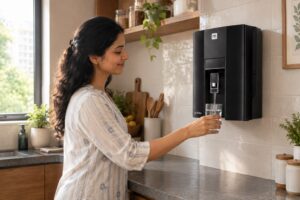
1. Instant Temperature Control: You do not need to wait for a kettle to boil or a refrigerator to chill the water. Tap the touch dispenser to get purified hot water instantly.
2. Daily Convenience: For tea, coffee, baby formula, or soup, the instant hot water saves time and effort.
3. Safe Drinking Water: Most hot and cold water purifiers feature RO, UV, and UF stages to remove up to 99.9% of viruses, heavy metals, and dissolved solids.
4. Energy Efficiency: Some models are designed with energy-saving options, like turning off the hot water function when not in use.
How to Choose the Best Hot and Cold Water Purifier for Home?
How much you pay for a hot and cold water purifier depends only on the features. See whether you find these features useful:
1. Hot tank volume: Check how much water the tank can offer before it reheats again.
2. Temperature presets: A hot water setting can give around 45°C of drinkable warm water. For tea, you need 80°C
3. Cooling capacity: If you want chilled water and not room-temperature water, check for the cooling compressor.
4. Drip Tray and guide light: Look for a small tray that can prevent spills and mis-pours when drawing hot water.
5. Additional purification: Some purifiers feature alkaline and copper stages that can change the taste and mineral content of the water.
Also Read: Water TDS Level in Delhi: Safe Limits and the Right Purifier
DriftLux: Rentomojo’s Hot and Normal Water Purifier in Delhi
DriftLux (starting at ₹822/mo on a 36-month plan) features a 7-stage purification process. It removes dirt, chemicals, viruses, and bacteria. The triple-layer filtration technology suits high-TDS water in Delhi. It does not cool water, but it has an 8.5L tank and offers hot water.
| DriftLux specification | Detail |
| Purification stages | Inline filter, RO, UV, UF, alkaline, copper, TDS infuser |
| Water modes | Ambient, warm (45°C), hot (80°C), touch dispense |
| Tanks | 8.5 L purified storage + 800 ml hot tank |
| Maximum input TDS | 2,000 ppm |
| Water recovery | 40% |
| Disinfection | Inline UV |
| Safety | Child lock, guide light, drip tray |
| Size (L × B × H) | 31.4 × 33.8 × 49.6 cm |
Who it is for: Users who want hot and warm water multiple times a day, have a fridge for chilled water and rely on high-TDS water from a borewell or tanker.
Who it isn’t for: If you want specifically chilled water. The purifier can only dispense warm and normal water.
How Much Does it Cost to Buy or Rent a Hot and Cold Water Purifier?
Popular hot and cold water purifiers cost around ₹37,000 to buy new. The hot-and-cold compressor costs more than a regular RO purifier. Below, we mention the pricing for different plans for DriftLux:
| Tenure | 3 months | 6 months | 9 months | 11 months | 12 months | 24 months | 36 months |
| Monthly rent | ₹1,049 | ₹965 | ₹897 | ₹860 | ₹839 | ₹831 | ₹822 |
Rentomojo adds one month’s rent as the refundable deposit. Renting a water purifier with hot and cold water pays off when you are staying in Delhi for less than 2 years. If you want to see whether the model fits your kitchen, you can choose a 7-day free trial.
Does a Purifier with Hot and Cold Water Need More Maintenance?
Yes, a hot and cold water purifier needs more upkeep than a basic RO.
1. The hot tank builds up scale over time when the water entering the tank is still hard.
2. The cold tank and compressor require cleaning at intervals.
3. A UV lamp can weaken and needs to be replaced on schedule.
4. The RO membrane needs to be changed, just like any other RO water purifier.
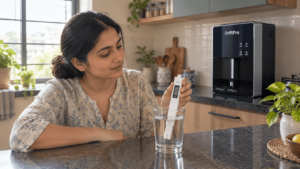
Rentomojo handles repairs and maintenance for DriftLux in Delhi. The filters are changed every six months.
Also Read: Water TDS Level in Delhi: Safe Limits and the Right Purifier
Conclusion
In the end, a water purifier with hot and cold water works like a regular purifier. However, the hot and cold water dispenser adds a layer of convenience to the user’s life. It rejects water like other RO purifiers, so you should check the recovery rate before choosing a unit. But the most important thing is to verify your water source – borewell, tanker, or Delhi Jal Board supply. Each supply has a different TDS level, which decides whether you need an RO in the first place. How many people are in your house matters – an 8.5L tank covers around four cups before reheating. If it is a busy household, you might need a bigger size. If you are unsure about whether you are choosing the right purifier, check out Rentomojo’s range of water purifiers on rent in Delhi.
Frequently Asked Questions
1. What to consider before choosing a hot and cold water purifier?
When choosing a hot and cold water purifier, consider the water’s TDS against the purifier’s rated maximum. Then check the hot water tank size, safety features, RO reject water rate, and whether you need a cold water feature.
2. Why do you need a water purifier with hot and cold water in Delhi?
A water purifier with hot and cold water suits Delhi’s cold months. In Delhi, hot water is just as essential as cold water, so you don’t have to use an electric kettle or boil water.
3. Is a hot and cold water purifier good for home use?
Yes, if you heat water several times a day, a hot water purifier for home is a good idea. The purifier has a heating element and a storage tank. Rentomojo’s DriftLux offers a multi-stage RO purification system, suitable for people who already need an RO.
4. Can I use an instant geyser for warm drinking water?
A geyser can provide hot water, but it may not be safe to drink. Heating does not remove dissolved salts, germs or bacteria. Warm water needs purification, especially if you use borewell water.
5. Can you keep a hot water purifier switched on all day?
Yes, you can keep the hot water purifier switched on throughout the day. Switching off the hot function overnight saves power. Some models have a sleep mode when idle.
6. How much does it cost to rent a water purifier with hot and cold water in Delhi?
Rentomojo’s DriftLux, a hot and normal water purifier, starts at ₹822/mo on a 36-month plan. The monthly pricing changes based on the tenure. Rentomojo adds a security deposit at checkout and handles delivery, installation, and repairs. The technician checks the TDS before and after installation.