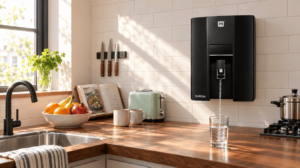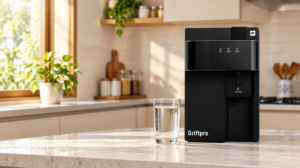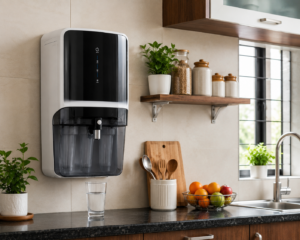


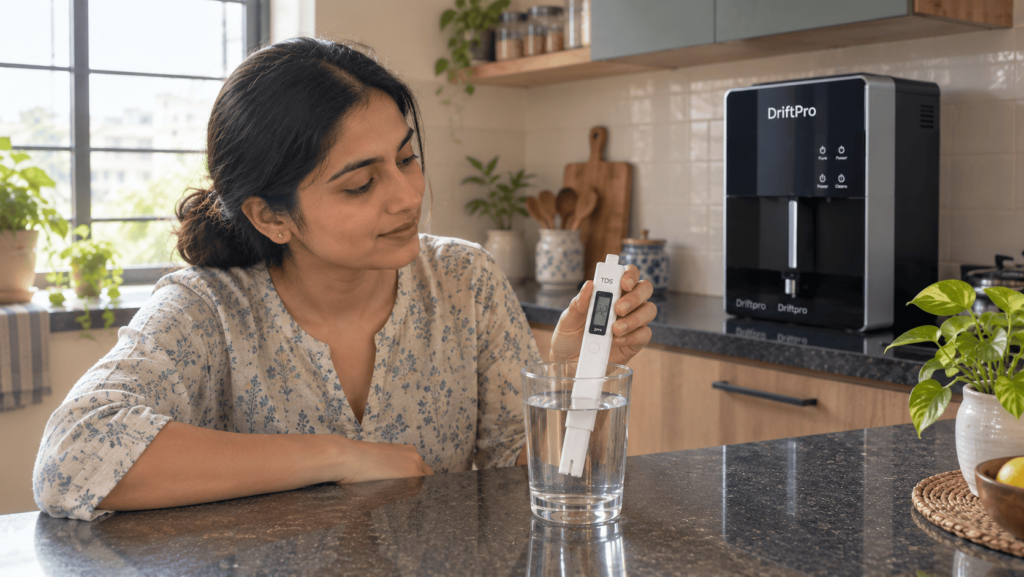
Water TDS levels in Delhi depend on the water source. Most tap water readings range between 109 and 304 mg/L. This is well within the BIS limit of 500 mg/L. TDS readings can be higher in groundwater.
TDS levels do not only vary by area but also by season. Many buildings use a mixed water supply from borewell, tanker, and Delhi Jal Board (DJB). Also, low TDS does not mean water is safe to drink. A TDS meter can indicate whether water contains dissolved salts, but it does not detect bacteria.
To help you understand the water TDS level in Delhi, we compare the quality of Delhi Jal Board supply and groundwater. This guide explains why TDS readings shift across seasons and which purifier is a good choice.
Also Read: TDS Levels In Water Purifier: What Is The Ideal Range?
TDS for Drinking Water: Delhi Jal Board vs. Groundwater
What is TDS in water? Total dissolved solids, or TDS, is the amount of salts and minerals dissolved in water. TDS is measured in ppm or mg/L. If your TDS reading shows 300, it is within the acceptable limit set by the BIS. 500 TDS is at the upper end of the range. Up to 2,000 mg/L is permitted only where no other source is available.
The TDS level for drinking water in Delhi relies on the source – treated river water supplied by the Delhi Jal Board or groundwater from tubewells or borewells.
TDS Levels of Delhi Jal Board
The Delhi Jal Board treats the water from the Western Yamuna Canal, the Upper Ganga Canal, and the Yamuna. The water reaches households after being treated at the plant. In May 2019, Shalabh Kumar, then Member (Water) at DJB, said the board keeps the TDS of its supply between 100 and 200 mg/L.
While DJB does not publish TDS ratings for every locality, reporters from Dainik Jagran tested tap water identified as DJB supply. The readings ranged from 156 to 304 mg/L. However, you should test tap water to find out the actual TDS level.
Groundwater TDS Levels in Delhi
Groundwater drawn from tubewells or borewells shows high TDS for drinking water. It gathers salts and minerals from the soil and rock. Delhi households still rely on borewell water. In Dainik Jagran’s January 2026 report, Rohini Sector 20 had 156 mg/L on DJB supply and 551 mg/L on groundwater. However, TDS levels of groundwater are not always high – at Sheesh Mahal Enclave in Kirari, the TDS was 161 mg/L against 304 mg/L for DJB supply.
The problem with groundwater quality goes beyond TDS. DJB tested groundwater samples between 2017-2018 and 2021-2022 and found 55% of the samples unfit for drinking.
Also Read: TDS For Drinking Water: How Much TDS Is Healthy In Water?
Delhi Water Map: Area-Wise TDS Levels
In most parts of Delhi, tap water usually falls within the BIS acceptable limit of 500 mg/L. The data is based on the spot test done by Dainik Jagran in January 2026. The highest TDS readings come from Outer Delhi and households relying on groundwater.
Delhi Water TDS Map: Area-Wise TDS Levels (2026)
| Area | Localities tested | TDS range (mg/L) | Highest reading |
| South Delhi | Kalkaji, Mehrauli, Amritpuri, Okhla Phase 3, Sarita Vihar | 136–561 | Kalkaji: 561 |
| East Delhi | Laxmi Nagar, Shakarpur, Seelampur, Mandawali, IP Extension + 9 more | 109–240 | Shakarpur W Block: 240 |
| Outer Delhi | Rohini, Bhalswa Dairy, Kirari, Nangloi, Sultanpuri | 156–968 | Bhalswa Dairy: 968 |
| West Delhi | Dwarka (Sectors 6, 7, 19), Palam | 152–284 | Dwarka Sector 7: 284 |
| Central Delhi | Paharganj, Chawri Bazaar, Jama Masjid, Sitaram Bazaar, Nabi Karim + 2 more | 166–510 | Nabi Karim: 510 |
Source: Dainik Jagran, 6 January 2026. Each figure is a single reading taken on one day, not an average. Most readings do not show whether the tap ran on DJB or borewell water.
Why Do the TDS Levels of DJB and Groundwater Differ?
Water TDS levels in Delhi differ by locality because water comes from various places. As a result, the water goes to different plants. Meanwhile, groundwater sits in underground aquifers for years. For borewells, water is pumped and doesn’t go through treatment. That’s why two households in the area can show different readings if one runs on DJB supply and the other on groundwater.
Where does DJB Supply Get Water From?
Delhi Jal Board gets raw water from the following sources:
- Upper Ganga Canal
- Yamuna River
- Munak Canal
- Bhakra storage
Is Delhi Water Hard or Soft?
Hardness in Delhi water varies by source. If your water contains calcium and magnesium, the hardness may be high. The findings also contribute to a large share of TDS. Groundwater likely carries more calcium and magnesium than Delhi Jal Board supply. Households using borewell water often see a white cast on taps, kettles, and utensils. Hard water also makes it hard to wash shampoo from hair; you may find your hair dry and rough. To deal with the TDS of borewell water, RO purifiers are necessary.
Also Read: Should You Use RO Water Purifier for Soft Water?
Why Does TDS of Water Vary from Month to Month?
Water TDS levels in Delhi can change with the seasons. Three main reasons are mixed supply, pipeline issues, and seasonal shortages. For example, a building on borewell water may see TDS rise in summer.
1. Mixed Water Supply
Many buildings store groundwater and DJB supply in the same overhead tank when DJB pressure is low—the blend changes with the ratio of each source on a given day. DJB also adds groundwater to its network. So, homes without a private borewell can receive some groundwater through the public supply.
2. Pipeline Leaks
Old pipelines let contaminated water seep into the supply, especially where sewers are nearby. A Dainik Jagran report (January 2026) reported that water TDS levels in Outer Delhi are high, where DJB supply lines often leak. Residents there reported sewer water mixing into the supply. This leads to bacterial growth that the TDS meter cannot detect. If your water suddenly smells or looks cloudy, it may be due to pipeline contamination.
3. High Demand in Summer
DJB usually faces shortages during peak summer. Many households use private tankers and borewell water. Private tanker water comes from groundwater, so TDS ratings increase between April and June. Also, where the water is stored plays a part – water sitting in an overhead tank for days can gather sediment. It may pick up more contaminants if the tank is not cleaned regularly.
Is Delhi Jal Board Water Safe to Drink without Purification?
Delhi Jal Board water is treated to drinking standards when it leaves the water treatment plant. However, the water that reaches your home may not be safe. In many areas, DJB supplies water at fixed hours instead of round the clock. Between supply hours, the pipes lose pressure. Dirty water seeps through cracks, and sewer lines may leak into damaged pipelines.
How to Report Poor Water Quality to Delhi Jal Board
Report to DJB if the water smells or looks dirty. Write down your consumer number on the water bill, your address, and when the issue started. If you can, take a photo of the water. File the complaint through the Delhi Jal Board helpline (dial 1916) or visit the official website.
Also Read: Water Purifier On Rent: Pros & Cons To Keep In Mind
What is the Ideal TDS for Drinking Water?
The ideal TDS for drinking water is below 300 mg/L, according to the WHO’s taste guidance. BIS sets 500 mg/L as the acceptable limit for India. The WHO has not set a health-based guideline value for TDS, and BIS does not display a minimum value. Below is how the WHO rates water by taste:
| TDS (mg/L) | WHO palatability rating |
| Below 300 | Excellent |
| 300–600 | Good |
| 600–900 | Fair |
| 900–1,200 | Poor |
| Above 1,200 | Unacceptable |
Is 100, 300, or 500 TDS Water Safe to Drink?
If you only look at the water TDS level, 100, 300, and 500 mg/L are within the BIS acceptable limit. At 100 mg/L, water tastes light. At 300 mg/L, it is at the top of the WHO’s “excellent” band, and at 500 mg/L, the water may taste a bit salty. Above 500 mg/L, water exceeds the BIS acceptable limit and is permitted up to 2,000 mg/L only where no other source is available. Use the TDS meter as a guide to hardness; it is not a safety certificate.
What is the TDS of RO Water?
The RO membrane removes dissolved salts, so the water’s TDS level is reduced. A TDS controller or mineral cartridge adds minerals back. Without a mineraliser, RO water can have a much lower TDS reading. The WHO notes that water with very low TDS levels can taste flat. Check the RO-purified water every few months, because an increase in the reading is often the first sign the membrane needs replacement.
Why RO-Purified Water Can Be Below 50 mg/L
RO water has a low reading because it removes dissolved solids without mineral adjustment. This happens in areas where DJB water has low TDS, which is common in much of East Delhi. If your water purifier has a TDS controller, set it around 75-150 mg/L. If your water is already low in TDS before RO purification, you can use a UV+UF purifier to remove germs and keep minerals.
Health Implications of TDS in Water
TDS indicates taste and hardness. The main question is what the dissolved solids are in the water and what the TDS meter cannot detect. Here’s what you should keep in mind for high and low TDS in water:
- High TDS levels may indicate higher levels of magnesium, calcium, potassium, and sodium in water.
- BIS sets acceptable limits of 75 mg/L for calcium and 30 mg/L for magnesium.
- Harmful metals are harmful in very small amounts. BIS limits arsenic and lead to 0.01 mg/L.
- Low-TDS levels make the water taste insipid. A TDS controller or mineral cartridge adds minerals back and keeps the output at around 75-150 mg/L.
How to Choose the Best Water Purifier for Delhi
Choosing a purifier depends on the TDS level of your water supply. Check your water TDS level in Delhi at home, then match the purification technology to the reading.
| Your water | TDS (mg/L) | Purifier type |
| DJB supply only | Below 200 | UV + UF |
| DJB supply or mixed | 200–500 | RO with TDS controller or mineral cartridge |
| Mixed supply or groundwater | 500–1,500 | RO + UV |
| Borewell / hard water | 1,500–2,000 | RO rated for 2,000 mg/L feed TDS |
How to Check TDS in Water at Home
A digital TDS meter shows the estimated concentration of dissolved solids in water. It displays in ppm or mg/L. Here’s how to use a digital TDS meter at home:
- Take a glass of water and switch on the meter.
- Dip the meter into the water up to the marked line.
- Stir gently. The reading appears after a moment.
- Test every tap separately when the building has both DJB and borewell supply.
- Check TDS in the morning and once in the evening.
- Repeat the test in summer and winter for seasonal change.
Also Read: How To Calculate TDS for Drinking Water At Home
Which Water Purifier to Rent from Rentomojo in Delhi?
Rentomojo, founded in 2014, is a furniture and appliance rental platform with 2,27,000+ subscribers across 28+ cities. Rentomojo’s collection covers UV+UF, RO, and RO-plus-mineral units, so match the water quality to the purifier.
| Model | Purification | Max supported TDS (mg/L) | Suits | Rent from (36-month plan) |
| Nirapure (non-RO) | UV + UF + minerals | Below 200 | DJB supply only | ₹292/month |
| DriftGo | RO + UV + UF + minerals | 2,000 | Mixed supply, groundwater | ₹391/month |
| DriftPro | Sediment + carbon + RO + UV + UF + alkaline | 2,000 | Mixed supply, groundwater | ₹419/month |
| RM Premium (6 L) | RO + UF + in-tank UV | 1,500 | DJB or mixed supply up to 1,500 | ₹469/month |
| DriftLux (8.5 L) | RO + UV + UF + alkaline + copper, with hot, warm and ambient dispensing | – | Households that want hot and warm drinking water | ₹842/month |
Note: Prices are available for 3, 6, 11, 12, and 24 months, as well as the 36-month plan. Check the Rentomojo app and website to see the latest pricing.
Rentomojo delivers water purifiers within 48-72 hours of order confirmation and assigns a technician after delivery. During installation, the technician checks the water TDS level in Delhi. For every water purifier on rent, Rentomojo includes repairs, annual maintenance, and free relocation. Rentomojo offers a 7-day free trial and free filter changes for its own line of purifiers.
Also Read: Best Water Purifier for Home in Delhi (2026): A Complete Guide
Final Thoughts
The water TDS level in Delhi depends on where your water comes from. Since TDS varies, it is best to check the readings at home. Test your tap water more than one season, then choose a purifier to match – UV+UF works for low-TDS water, RO for mixed water supply and high TDS levels in Delhi water. If you are likely to change houses or cities, renting a water purifier is more practical than buying one. Rentomojo’s water purifier rentals start from ₹292/mo for non-RO purifiers on 36-month plans. Explore Rentomojo’s water purifiers in Delhi!
Frequently Asked Questions
1. What is a good level of TDS in water?
A good TDS level for drinking water is below 300 mg/L, which the WHO rates as excellent for taste. The WHO recommends water between 300 and 600 mg/L as good. TDS levels from 900 to 1,200 mg/L are considered poor, and above 1,200 mg/L is considered unacceptable.
2. Is TDS 51 safe for drinking water?
Water at 51 mg/L is within BIS drinking water limits. BIS does not set a minimum TDS but caps it at 500 mg/L. RO water purifiers often have similar output. A TDS reading alone doesn’t confirm the water is safe to drink, because a TDS meter cannot detect lead or bacteria.
3. How is Delhi Jal Board water quality?
Delhi Jal Board treats water to drinking-water standards at its treatment plants. DJB draws raw water from the Yamuna, the Upper Ganga Canal, and Bhakra storage. Water quality can still degrade after treatment because it passes through old pipelines and sits in storage tanks.
4. What is the appropriate TDS for drinking water?
The recommended TDS for drinking water in India is 500 mg/L. BIS permits TDS between 500 and 2,000 mg/L where no other source is available. Water above 2,000 mg/L exceeds the permissible limit.
5. What is the best TDS for drinking water?
The ideal TDS for drinking water is below 300 mg/L, which is rated excellent by the WHO. 50 to 150 mg/L is commonly preferred for taste and mineral content.
6. Is zero TDS good for health?
Zero or very low TDS may mean no dissolved minerals, but the WHO notes that extremely low TDS can result in an insipid, flat taste. Neither BIS nor the WHO sets a minimum TDS level for drinking water.
Sources
- Dainik Jagran, “Toxic Water In Delhi Taps: TDS Hits Dangerous 968; Sewer Mix Causing Kidney And Stomach Ailments”, 6 January 2026. thedailyjagran.com
- Press Trust of India via Business Standard, “DJB says RO purifiers not needed for water supplied by it”, 30 May 2019. business-standard.com
- World Health Organisation, Total Dissolved Solids in Drinking-water: Background document for development of WHO Guidelines for Drinking-water Quality. who.int (PDF)
- Delhi Jal Board, “About Us” (raw water sources, water treatment plants, helpline 1916). delhijalboard.delhi.gov.in
- Bureau of Indian Standards, IS 10500:2012 Drinking Water — Specification (Second Revision). law.resource.org (PDF)