

Staying hydrated is a basic necessity; it should not be a matter of concern. Having an RO water purifier at home does not mean you are getting pure water. After all, a malfunctioning RO water purifier can be a major inconvenience, leaving you with unsafe or bad-tasting water. Knowing when to call a professional for an RO repair service is crucial for maintaining your health and the longevity of your system. This article will guide you through common RO water problems, from low water flow to strange noises and leaks. We will tell you should give the water purifier repair service a call and how often you should give them a call. Let’s find out everything below!
Also Read: Is RO Water Good For Your Health? Find Out All The Answers!
What are the Most Common Problems in RO Water?
Facing issues with your RO system is a common experience. While these systems are designed for reliability, regular use can lead to several problems. Understanding these common RO problems will help you identify when to fix the issue yourself or when to seek a professional for an RO repair service.
1. Low water flow or no water output
One of the most frequent RO purifier problems is a significant drop in the flow of purified water. This is often caused by clogged filters. Over time, the sediment and carbon filters get saturated with impurities, which restricts water flow. If the RO membrane itself is clogged, it can also drastically reduce the water output. Another reason could be a faulty booster pump, which is responsible for increasing water pressure for the RO process. A lack of proper pressure means the system cannot push water through the membrane effectively.
2. Strange Taste or Odour in Purified water
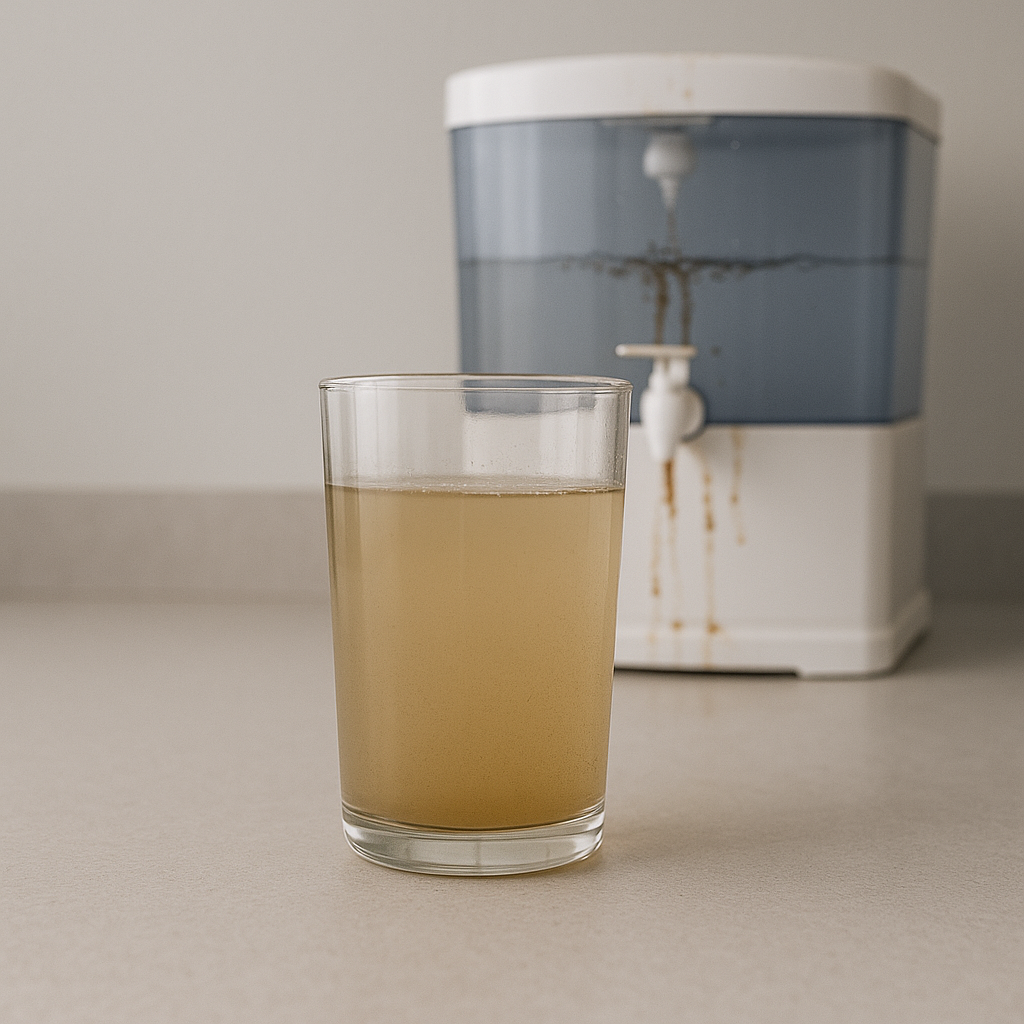
If your purified water has a strange taste or odour, it’s a clear sign of an issue with your RO system. This is typically due to a depleted carbon filter. Carbon filters are essential for removing chlorine and other chemicals that cause bad tastes and smells. When the filter’s capacity is exhausted, these impurities pass through and end up in your drinking water. Sometimes, a bacterial buildup in the storage tank or pipes can also cause a musty or stale smell.
Also Read: Best Water Purifiers In Mumbai: How To Choose One For Home
3. Water Leakage from RO System
Leaks can be a major headache and are among the most common RO purifier issues. They can occur at various points in the system, such as around the fittings, at the connection points of the filters, or from a cracked housing. Leaks are often caused by loose connections, damaged O-rings, or high water pressure. It is important to address leaks promptly to prevent water damage and potential damage to the electrical components of your RO unit.
3. RO Water Purifier is Making Unusual Noises
An RO system should generally operate quietly. If you hear loud rattling, gurgling, or humming sounds, it’s a sign that something is wrong. A gurgling sound often indicates air in the system, possibly due to low incoming water pressure. A loud humming or rattling sound might be coming from a malfunctioning booster pump or a loose component inside the unit. These noises should not be ignored, as they can be symptoms of a larger mechanical failure.
4. Frequent filter clogging
If you find yourself replacing filters more often than the manufacturer recommends, you have a problem. Frequent filter clogging, especially in the sediment filter, suggests a high level of sediment in your source water. While filters are meant to trap impurities, an excessive amount can shorten their lifespan. This issue points to the need for a pre-filter or a more robust sediment filter to handle the high impurity load in your water.
Also Read: TDS For Drinking Water: How Much TDS Is Healthy In Water?
Why Does My RO Purifier Stop Working?
When your RO system suddenly stops working, it is definitely a matter of concern. Finding out the cause is the first step toward finding a solution. Several factors, from electrical problems to clogged filters, can cause an RO system not to work. Understanding these common water purifier issues can help you figure out if you need a simple fix or a professional RO repair service.
1. Power supply issues
The most basic reason your RO unit isn’t working could be a lack of power. You should always check the power cord and the electrical outlet first. Make sure the cord is plugged in securely and that there hasn’t been a power outage. A tripped circuit breaker can also be the culprit, so check your home’s fuse box.
A malfunctioning voltage stabiliser, if you have one, can also prevent the RO unit from turning on, as it protects the system from power fluctuations. These are simple checks that you can do yourself before you call a professional.
2. Pump or Motor Failure
The pump is a vital part of your RO system, as it creates the necessary pressure to push water through the RO membrane. If you notice that your RO system is completely silent and no water is flowing, the pump may have failed.
A faulty motor within the pump can also cause a complete shutdown. This type of problem is not easy to fix on your own and usually requires a professional. You may also hear unusual grinding or loud humming noises before a complete pump failure. This indicates that the motor is under strain and is likely to stop working soon.
Also Read: Best pH Level of Drinking Water: Is 9.5 Safe?
2. Blocked Filters or Membranes
Clogged filters are one of the most common RO water problems and a major reason why an RO system might stop working. Over time, sediment, carbon, and other filters become choked with impurities they’ve removed from the water. When these filters are completely blocked, water cannot pass through, and the system shuts down to prevent damage.
The RO membrane itself can also get clogged with minerals and other dissolved solids, a process known as scaling. A blocked membrane will stop the purification process entirely, leaving you with no water output. Regular filter replacement is key to preventing this issue. If you’ve recently replaced your filters and the system still isn’t working, it might be an issue with the membrane.
When Should You Call a Professional RO Repair Service?
While you can handle some minor issues with your RO system, many problems require the expertise of a professional. Knowing when to call a professional RO repair service can prevent further damage and ensure your system is working correctly. A qualified technician has the right tools and knowledge to diagnose complex issues and perform the necessary repairs safely.
1. Persistent Water Leakage Despite Filter Change
A small leak from a loose connection is something you might be able to fix yourself. However, if you have a persistent leak that you cannot locate or stop, it’s time to call a water purifier repair service. A professional can identify the source of the leak, which might be a cracked housing, a faulty pressure valve, or a broken fitting. Ignoring a continuous leak can lead to water damage in your home and may even pose an electrical hazard, especially since RO systems contain electrical components.
2. Unusual Taste Even After Maintenance
If you notice a strange taste or odour in your water after you have changed the filters, it is a sign of a deeper issue. This could be due to a faulty post-carbon filter, bacterial contamination in the storage tank, or a compromised RO membrane. A professional RO system repair technician can thoroughly sanitise the system and replace any faulty parts. They can also test your water to determine the exact cause of the bad taste and ensure your system is providing clean and safe drinking water.
Also Read: How To Calculate TDS for Drinking Water At Home
3. Complete System Shutdown
When your RO system completely stops working, it is likely a serious problem that you cannot fix on your own. This could be due to a motor or pump failure, a power supply issue with the adapter, or a major clog in the main water line. A professional RO servicing technician can diagnose the exact cause of the shutdown and replace the failed components. Attempting to fix these complex electrical and mechanical problems yourself can be dangerous and may void your system’s warranty.
4. Repeated Filter Clogging in a Short Time
If you find that your filters are clogging up much faster than their recommended lifespan, your RO system has a problem. This could be an indicator of very high levels of impurities in your water, or it could mean your system is not sized correctly for your water’s quality. A professional RO technician can test your water’s TDS levels and suggest the right pre-filtration system or a different type of RO membrane to handle the high impurity load. This is one of the important RO servicing needs to ensure the long-term health of your RO system.
Can I Fix RO Water Purifier Problems at Home?
You can handle some minor RO system problems on your own, especially those that don’t involve complex parts or electrical components. Performing a simple RO troubleshooting at home can save you time and money. However, it’s important to know your limits and understand when a problem is too big for a DIY fix.
1. DIY Fixes: Changing Pre-Filters, Checking Connections
Some of the most common issues with RO systems have simple solutions you can apply yourself. For example, if you notice a drop in water flow, the first thing to check is the sediment pre-filter. These filters trap large particles and are easy to replace. You can purchase a replacement and follow the instructions in your user manual. This is a basic RO DIY repair that can restore your system’s performance.
Leaks can also sometimes be fixed at home. If you see a small leak, first, turn off the water supply to the RO unit. Then, check all the connection points and fittings. A loose nut or a misaligned O-ring is often the cause. Gently tightening the connections or repositioning the O-ring can solve the problem. Before you call a professional RO repair service, it is always a good idea to perform these simple checks.
If your RO system is not turning on, check the power cord and the electrical outlet. Make sure the cord is plugged in securely. A tripped circuit breaker could also be the culprit. These are easy checks that don’t require any special tools.
Also Read: Can You Reuse RO Waste Water? 6 Ways To Use Reject RO Water!
2. When DIY is not Enough: Call Professionals
While some problems are simple to fix, many others require a professional RO system repair. For instance, if you’ve replaced the pre-filters and the water flow is still low, it might be an issue with the RO membrane. Replacing the membrane is a more delicate task that requires specific tools and knowledge to ensure a proper seal and prevent leaks.
Similarly, if you hear unusual noises from the pump or the system completely stops working, you should call a professional RO technician. These are signs of a deeper mechanical or electrical failure that can be dangerous to repair without proper training. Trying to fix a pump or motor on your own can cause more damage to the system and may even void your warranty. When facing these kinds of issues, professional RO servicing is the safest and most effective solution.
How Often Should You Call RO Repair Service?
To ensure your RO system continues to provide clean and safe drinking water, regular maintenance is a must. A consistent RO servicing schedule can extend the life of your system and prevent expensive repairs. The frequency of service depends on several factors, including the quality of your source water, how often you use the system, and the specific model of your RO unit.
1. Recommended Service Frequency: Every 6–12 Months
For most households, the general recommendation for an RO maintenance check is every 6 to 12 months. This routine service typically involves a technician checking the system’s overall performance, cleaning the components, and replacing the pre-filters. These pre-filters are crucial because they protect the delicate RO membrane from large impurities and chemicals like chlorine.
If you live in an area with hard water or a high level of dissolved solids, you may need to service your system more often, perhaps every 3 to 6 months. High TDS levels can clog filters and the RO membrane much faster, reducing the system’s efficiency. Following a regular RO servicing schedule ensures that these key components are replaced before they cause a drop in water quality or a complete system failure.
2. Regular Maintenance Benefits
Committing to regular RO maintenance brings several important benefits. First, it ensures consistent water quality. Over time, filters and membranes lose their ability to remove contaminants, which can result in bad-tasting water or even health risks. By sticking to a service schedule, you ensure your RO system always works at its best, providing pure water.
Regular maintenance also helps you avoid costly future repairs. A professional RO technician can identify minor issues, such as a small leak or a worn-out part, before they become a major problem. For example, a clogged pre-filter can put extra strain on the booster pump and the RO membrane, leading to their premature failure.
Timely RO repair service for these simple issues can save you from the high cost of replacing major components like the pump or membrane. Investing in a consistent service schedule is a smart way to protect your health and your investment.
Also Read: AMC for Water Purifier: Pros & Cons Explained
What is the average cost of RO repair service?
The cost of an RO repair service can vary greatly depending on the type of problem you have, the brand of your system, and your location. While some repairs are inexpensive, major component replacements can be more costly. Understanding the typical RO repair charges can help you budget for maintenance and unexpected fixes.
1. Filter Replacement Cost
The most common and necessary part of RO maintenance is replacing the filters. The RO service cost for this can range from a few hundred rupees to a couple of thousand, depending on which filters you need to change. The pre-sediment and carbon filters are generally the least expensive, as you need to replace them more frequently, often every 6-12 months. When a technician replaces these, you might pay for the parts and a small labour charge. Some companies offer annual maintenance packages that include these filter replacements, which can sometimes be more cost-effective.
2. Pump or Membrane Replacement Cost
If your RO system has a more serious problem, like a failed pump or a clogged membrane, the RO maintenance price will be significantly higher. The RO membrane is the heart of the system, and its replacement is a major repair. Membranes can be expensive, and their cost depends on the brand and quality. Similarly, if the booster pump fails, you will need to replace it. A new pump can also be a considerable expense. These are not repairs you should attempt yourself, as they require a professional to ensure proper installation and calibration. The cost of a new pump or membrane will include the part itself and the technician’s fee.
3. Full Servicing Package Cost
Many RO repair service companies offer full servicing packages, which are often a good option for long-term maintenance. These packages usually include an inspection of the entire system, cleaning, and replacement of all standard filters.
Some packages might also include the replacement of the RO membrane at a discounted rate. While the initial RO service cost for a full package seems higher, it can be a smart way to avoid unexpected repair bills. These packages provide peace of mind and ensure your RO unit receives the regular care it needs to continue providing drinking water for your family. Before choosing a package, compare what each provider offers to find the best value for your specific needs.
Also Read: When Should You Change Your RO Filter? Signs To Look Out For!
Final Thoughts
Finding a reliable RO repair service is essential for maintaining your RO system and ensuring your family has access to clean, safe drinking water. From low water flow to strange tastes or a complete system shutdown, a professional can diagnose and fix a wide range of common RO problems. While some simple tasks can be handled at home, complex issues like a pump failure or a clogged membrane require the expertise of a professional for water purifier repair service. Regular RO maintenance not only extends the life of your unit but also helps you avoid costly future repairs. If you want to forget about the hassles of repair and maintenance, consider renting a water purifier and enjoy free repairs and servicing. Visit RentoMojo today!
Also Read: A Guide To Finding The Best Water Installation Service
Frequently Asked Questions
1. When to get the RO water purifier serviced?
You should get your RO water purifier serviced every 6–12 months to ensure clean, safe drinking water. If you notice low water flow, a strange taste, or leakage, it’s time to call a professional RO repair service. Regular servicing prevents damage and keeps filters and membranes functioning properly.
2. What to do if the RO purifier is not working?
First, check the power supply, water source, and filter connections. If the RO purifier still doesn’t work, the issue may be with the pump or membrane. In such cases, avoid DIY fixes and contact a trusted RO repair service to diagnose and fix the problem safely.
3. How long does RO water last?
RO water stays fresh for about 24–48 hours if stored in a clean, covered container. Beyond that, it may lose its taste and purity due to exposure to air and bacteria. Regular cleaning of storage tanks and timely RO servicing ensure long-lasting, safe drinking water.
4. How often should you change an RO membrane?
An RO membrane should be replaced every 2–3 years, depending on water quality and usage. If you notice a salty taste, reduced flow, or frequent clogs, it’s a sign the membrane needs replacement. A professional RO repair service near you can test and change it to maintain purification efficiency.
5. How to check if the RO water purifier needs servicing?
Common signs include unusual taste, foul odour, slow water flow, leakage, or continuous filter clogging. If your RO system shows these issues, it’s time for professional maintenance. Calling an expert RO repair service ensures your purifier works efficiently and delivers safe, clean water at all times.