



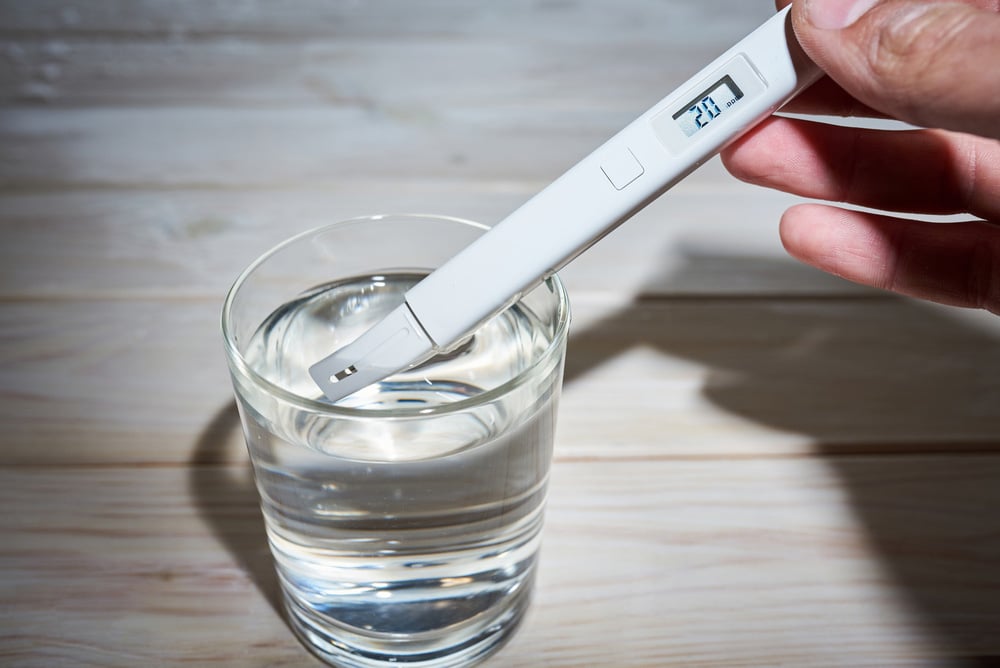
Water quality is a matter of concern in India, and it often deteriorates during the monsoon. But how do you know whether your drinking water is safe enough? One of the key indicators is TDS or Total Dissolved Solids. TDS is the content of organic and inorganic substances in water, and the materials can be minerals, salts, or impurities. While your water may contain calcium and potassium, it could also contain lead, chlorine, herbicides, or pesticides. This means that having an excessive amount of TDS for drinking water or a low quantity might put your health at risk.
Even if you have a water purifier, it’s still a good idea to check the TDS levels. If you know how to check the TDS of water, you can keep the worries at bay. To help you find the ideal TDS for drinking water or how to calculate it manually, we answer all your questions here. Let’s take a look below!
Also Read: How To Choose The Best Water Purifier For Home In Delhi
Does TDS Matter for Drinking Water?
When it comes to safe drinking water, understanding TDS for drinking water is crucial. TDS refers to the amount of minerals, salts, and organic matter dissolved in water. While a balanced TDS level improves taste and provides essential minerals, both very high and very low TDS can create problems.
Water with high TDS often contains excess calcium, magnesium, or salts. This not only gives water a salty or metallic taste but can also lead to scaling in appliances like kettles, geysers, and water purifiers. Over time, such buildup reduces appliance efficiency and increases maintenance costs. On the other hand, low TDS water—usually below 50 ppm—may taste flat and lack important minerals such as calcium and magnesium. Drinking demineralised water for long periods can deprive the body of these essential nutrients, which play a role in bone and overall health.
According to BIS standards in India, the ideal TDS for drinking water is between 50–150 ppm, while anything above 500 ppm is considered unsuitable without purification. By keeping your water’s TDS within the recommended range, you not only protect your health but also extend the life of your home appliances.
| TDS Level (ppm) | Water Quality | Taste & Health Impact | Action Recommended |
|---|---|---|---|
| <50 | Too Low / Demineralised | Flat taste, lacks essential minerals (Ca, Mg) | Use a mineralizer or TDS controller |
| 50–150 | Excellent | Pleasant taste, balanced minerals | Safe for direct drinking |
| 150–300 | Good | Acceptable taste, minor scaling possible | Suitable, monitor regularly |
| 300–500 | Fair | Hard taste, scaling on appliances | Consider RO purification |
| >500 | Poor / Unsafe | Salty or bitter taste, harmful salts & heavy metals | Must use RO or an advanced purifier |
How to calculate TDS at home in India
Ensuring the quality of drinking water at home is crucial for health, and understanding the TDS of water is a key aspect. TDS refers to the concentration of dissolved inorganic and organic substances in water. While some dissolved solids are harmless and even beneficial, high levels can indicate contamination and affect the taste and safety of your water.
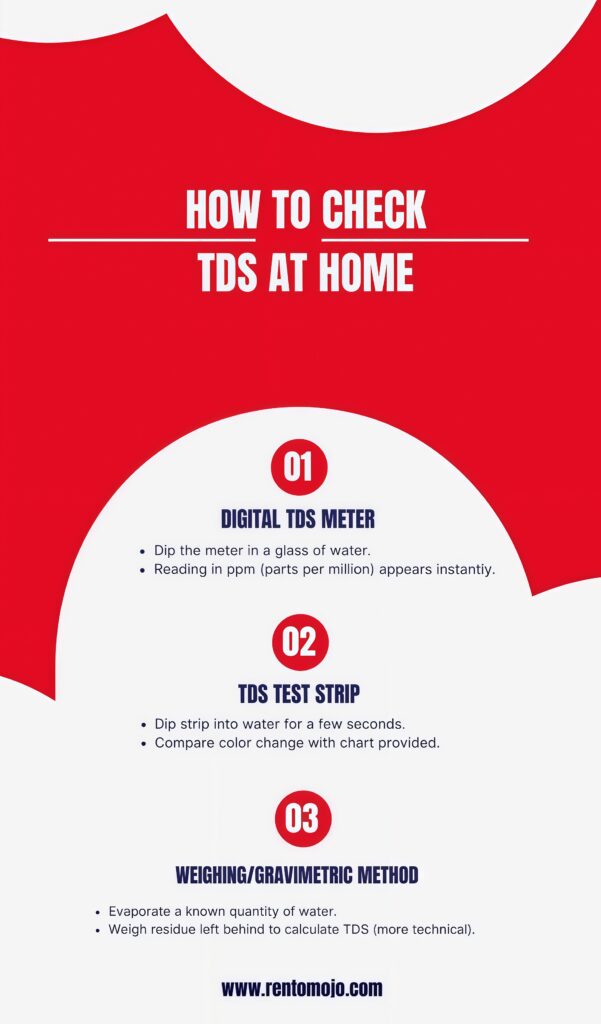
The good news is that learning how to check the TDS of water at home is a straightforward process. The most common and convenient method involves using a portable TDS meter. These compact devices are readily available online and in hardware stores. To use one, simply dip the probe of the TDS meter into a sample of your drinking water. The digital display will then show the TDS reading in parts per million (ppm).
Understanding what constitutes the best TDS level for drinking water is important. Generally, the ideal TDS for drinking water is considered to be between 50 and 150 ppm. Readings within this range indicate that the water contains a healthy balance of minerals with minimal impurities. If the TDS of water is significantly higher, it might be advisable to consider filtration or purification methods to achieve the ideal TDS for drinking water and ensure safe consumption.
Also Read: TDS For Drinking Water: How Much TDS Is Healthy In Water?
How to Calculate TDS Manually?
While modern digital TDS meters offer the quickest way to check TDS in water at home, it is possible to calculate the TDS of water manually through a gravimetric method, often used in laboratory settings. This method essentially measures the weight of solids left behind after all the water has evaporated.
To perform this, you will need a clean glass container, filter paper, an evaporating dish, a stirring stick, a pipette (preferably for 50ml), and a sensitive weighing scale. The steps show how to calculate the TDS of water manually involve:
- Weigh the empty and completely dry evaporating dish (let’s call this weight ‘B’).
- Filter a known volume of your water sample (e.g., 50 ml) through filter paper into the pre-weighed evaporating dish. This filtration ensures only dissolved solids remain.
- Allow the water in the dish to evaporate completely, which can be accelerated by gentle heating.
- Once all the water has evaporated and only the dry residue remains, weigh the evaporating dish with the residue (let’s call this weight ‘A’).
Now, you can use the formula to check the TDS level for drinking water:
TDS (mg/L) = [(A – B) * 1000] / Volume of water sample (ml)
For example, if your dish with residue weighs 25.025g, the empty dish weighed 25.000g, and you used a 50ml sample:
TDS = [(25.025g – 25.000g) * 1000 mg/g] / 50 ml = [0.025g * 1000 mg/g] / 50 ml = 25 mg / 50 ml = 0.5 mg/ml = 500 mg/L (or 500 ppm).
While this method helps in understanding how to check the TDS of water, it’s more labour-intensive than using a digital meter. For assessing the TDS level for drinking water in a practical home setting, a digital TDS meter remains the most convenient and common tool.
What is a Good TDS Level for Drinking Water?
When thinking about the best TDS level for drinking water, it’s about finding a sweet spot. Water with very little TDS can taste boring. A good drinking water TDS level is usually between 50 and 150 ppm. This drinking water TDS range means your water is clean but still has good minerals like calcium and magnesium, which are healthy and make water taste better.
The WHO suggests a TDS level of less than 300 mg/L (or ppm) as excellent for drinking water, with a range of 300-600 ppm still considered suitable for palatability. The BIS recommends an acceptable limit of up to 500 ppm. Therefore, a recommended TDS for drinking water often falls within the 50-300 ppm bracket, providing a healthy and palatable experience. When the TDS level for drinking water exceeds these recommendations, further purification methods are generally advised.
Also Read: 9 Benefits Of Renting An RO Water Purifier For Home
What is the TDS of RO Water?
Reverse Osmosis (RO) systems are known for their ability to significantly reduce the TDS of RO water. This is because an RO system works by pushing water through a very fine membrane that filters out most dissolved solids, leaving behind purer water.
The TDS level can vary depending on the initial water quality and the efficiency of the RO system. However, a normal TDS value for drinking water coming from an RO purifier is typically quite low.
- Many experts suggest an ideal TDS level for RO water to be between 50 and 150 ppm.
- Some systems can even bring the TDS in the RO system output down to 25 ppm or lower.
While RO systems are excellent at reducing the normal TDS for water, extremely low TDS (below 50 ppm) can sometimes make the water taste “flat” because essential minerals are also removed. This is why some RO systems include a TDS controller or a mineraliser that adds back a small amount of beneficial minerals to achieve a more balanced TDS level in the RO water.
Also Read: Is RO Water Good For Your Health? Find Out All The Answers!
How Much TDS is in Tap Water?
The TDS of tap water can vary depending on your location and the source of your water. Factors like the local geology, environmental conditions, and water treatment processes all play a role.
In many areas, normal TDS for water from a tap can range from 200 to 500 ppm. Some regions, especially those with hard water or where water passes through mineral-rich soil, may have higher tap water TDS levels. For instance, in Bengaluru, tap water TDS typically ranges from 200-300 ppm, while in Chennai, it can be higher due to borewell sources.
It’s important to note that while some dissolved solids are natural minerals and are not harmful, very high TDS levels might indicate the presence of undesirable contaminants. This is where the concept of safe TDS for drinking water comes in.
Also Read: How To Improve Taste Of Water With Water Purifiers
Does Boiling Water Reduce TDS?
A common question regarding water purification is whether boiling effectively reduces the TDS. The short answer is: generally, no. Boiling primarily works by killing harmful bacteria, viruses, and other microorganisms, making water biologically safe for drinking.
However, boiling does not remove dissolved inorganic solids like minerals (e.g., calcium, magnesium) or chemical contaminants (e.g., heavy metals, pesticides, nitrates). In fact, as water boils and evaporates, the dissolved solids are left behind, potentially increasing their concentration in the remaining water. This means that the PPM levels in water for these dissolved solids may actually increase, rather than decrease.
Therefore, while boiling is an excellent emergency measure for microbial safety, it’s not effective for lowering the TDS range of your water or achieving the required TDS for drinking water if your tap water has high levels of dissolved solids. For managing the normal TDS of drinking water and removing chemical impurities, filtration systems such as RO or distillation are far more effective than boiling.
Does RO Remove TDS?
One of the primary functions of a RO water purifier is to reduce the TDS in water significantly. An RO system works by forcing water through a semi-permeable membrane that has incredibly tiny pores. These pores are small enough to block dissolved inorganic solids, heavy metals, and other impurities, while allowing water molecules to pass through.
The efficiency of an RO system in removing TDS is quite high, often rejecting 90-99% of dissolved solids. This means the TDS of RO water will be lower than the incoming tap water. The TDS levels in RO water are typically reduced to a range that is considered ideal for drinking.
A TDS value for RO-purified water usually falls between 50 and 150 ppm, which is considered the optimal TDS for RO water for both taste and health. It’s important to note that while an RO system is excellent at lowering the TDS level in water purifier output, some advanced RO purifiers also include a TDS controller.
Also Read: 6 Benefits Of RO Water Purifiers for Your Home In Bangalore
How Often Should You Test TDS for Drinking Water?
Water quality in India can change with seasons, source (borewell, municipal supply, or tanker), and even plumbing conditions. That’s why regular testing is important for effective water purifier maintenance. For most homes, testing TDS every 2–3 months is enough to track changes. If you rely on borewell water, it’s better to check monthly, since mineral and salt levels can rise quickly. In cities with municipal water supply, testing once every 3–4 months is usually sufficient, but it’s still wise to test after the monsoon, when pipelines and reservoirs are more prone to contamination.
Frequent checks also help you know when your RO or UV purifier needs servicing. A sudden spike in TDS levels may mean the purifier’s filters or membrane are not working properly. Keeping track ensures your family drinks safe, healthy water and extends the life of your appliances.
Also Read: Best pH Level Of Drinking Water: Is 9.5 Good For You?
Is 45 TDS Good for Health?
When we talk about TDS for drinking water, the ideal range is as important as the water source itself. A TDS level of 45 ppm falls into the very low category. At this level, the water is highly purified and contains very few dissolved minerals such as calcium and magnesium.
While water with 45 TDS is generally safe to drink, it may not be the best choice for long-term health. Low TDS water often tastes flat and can deprive the body of essential minerals that contribute to stronger bones, better digestion, and overall well-being. According to BIS standards in India, the most suitable range of TDS for drinking water is 50–150 ppm. This ensures the water not only tastes fresh but also provides the right balance of minerals.
If your home water consistently shows 45 TDS on a TDS meter, consider using a TDS controller or mineraliser in your purifier. These features add healthy minerals back to maintain a safe and enjoyable drinking water quality. For households relying on RO purifiers, this step is especially important to prevent demineralised water consumption.
Also Read: Regular Water Purifier or RO Water Purifier? Find Out Here!
Final Thoughts
Understanding and regularly checking the TDS levels for drinking water at home is a simple yet powerful step towards ensuring your family’s health. While methods like manual calculation exist, a digital TDS meter offers the most convenient and accurate way to gauge your water’s quality.
For RO-purified water, aiming for an ideal TDS for RO water between 50-150 ppm ensures that harmful impurities are removed while beneficial minerals are retained for a balanced taste. If you have been struggling with the TDS level of your drinking water, you can rent a water purifier. RentoMojo offers a range of water purifiers for rent, and you can choose from top brands such as Kent, DrinkPrime, and Livpure. Visit RentoMojo and explore our water purifiers on rent!
Frequently Asked Questions
1. Is 45 TDS for drinking water?
A TDS reading of 45 ppm for drinking water is generally considered very good. It indicates a low concentration of dissolved solids, meaning the water is relatively pure. While the ideal TDS for drinking water is often cited as 50-150 ppm, 45 ppm falls within a safe TDS range for drinking water and is usually the result of effective purification by an RO water purifier.
2. What is a suitable TDS level for bathing?
While less strict than drinking water, a suitable TDS level for bathing water is generally between 100 and 300 ppm. Water within this range contains enough minerals to feel good on the skin without being overly harsh or contributing to issues like dryness, irritation, or soap scum buildup. Higher TDS levels, especially above 500 ppm, can cause skin and hair problems.
3. How to check water purity in RO?
The easiest way to check RO water purity at home is with a digital TDS meter. Simply collect a sample of the RO water and dip the meter’s probe in. The reading, in parts per million (ppm), indicates the concentration of dissolved solids. A low TDS reading (typically 50-150 ppm) suggests your RO system is working effectively.
4. How to check the water purity level?
You can easily check your water’s purity using a TDS meter, which measures the amount of TDS in drinking water. A lower reading typically means fewer dissolved impurities, indicating cleaner water.
5. Is 60 TDS water good for health?
Yes, water with TDS for drinking water around 60 ppm is generally considered excellent for health, as it’s often within the ideal range that ensures good taste and contains beneficial essential minerals. The WHO considers TDS levels below 300 mg/L as “excellent” for drinking, and the BIS suggests an optimal range between 75-150 ppm for packaged drinking water.
6. What is the ideal TDS for bathing water?
While there’s no strict “ideal” TDS for bathing water like there is for TDS for drinking water, a range of 100-300 ppm is often suggested for skin health. Higher TDS levels in bathing water can lead to issues like dry skin, hair problems, and soap scum buildup.
7. Is 30 TDS safe for RO water?
Yes, 30 TDS for drinking water produced by an RO water purifier is generally considered very safe. RO water purifiers are designed to significantly reduce TDS, and a reading of 30 indicates the system is working effectively to remove impurities.
8. How to check the TDS of water without a TDS meter?
While a TDS meter offers the most accurate and convenient reading for TDS for drinking water, you can get a rough idea using an evaporation method at home. Simply boil a measured amount of water in a clean, empty dish until all the water evaporates; any residue left behind indicates the presence of dissolved solids, with a larger amount suggesting higher TDS.
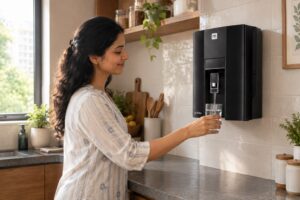
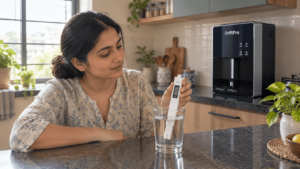
A digital TDS meter is the simplest tool for at-home RO water purity testing. Just take a sample of the RO water and submerge the probe of the meter in it.