

Does your RO water taste different lately? Perhaps you’ve noticed a strange smell coming from your tap, or maybe the flow of water from your dispenser has slowed to a trickle. These are common concerns for anyone relying on a RO water filter for their daily hydration. Many people don’t realise that the hard-working filters inside their water purifier don’t last forever. Over time, these filters collect all the impurities from your tap water, eventually becoming saturated and less effective.
When your RO filter cartridge is past its prime, it can no longer provide the high water quality you expect. This not only affects the taste and smell of your drinking water but also compromises the entire water purification process. Ignoring these warning signs can lead to consuming less-than-pure water and potentially damaging your RO system. Knowing when to address these issues is key to maintaining your system’s performance and ensuring you consistently have safe, clean water. Here, we will tell you when to change your RO water filter, how to check whether the filter needs to be changed and everything else to keep in mind.
Also Read: Is RO Water Good For Your Health? Find Out All The Answers!
When Should I Replace My RO Filter?
Knowing the right time to replace your RO water filter is key to keeping your drinking water clean and your system running well. Filters don’t last forever, and their effectiveness decreases over time as they trap more impurities. Ignoring replacement signs can lead to poorer water quality and put extra strain on your entire water purification system.
1. Pay Attention to Water Taste and Smell
One of the clearest signs that your RO filter needs changing is a noticeable change in the taste and odour of your water. If your once-pure RO water starts tasting metallic, earthy, or simply “off,” or if it develops an unpleasant smell, it’s a strong indicator that the carbon filters, which are crucial for removing chlorine and other odour-causing chemicals, are worn out. Your RO membrane might also be letting more dissolved solids through.
2. Notice Your Water Flow Rate
Has the water flow from your RO faucet become unusually slow? This often means that your sediment filter or carbon filter (often called pre-filters) is clogged with dirt, rust, and other particles. These filters are the first line of defence, and when they’re blocked, water struggles to pass through to the RO membrane, reducing the overall output of your system. A significantly reduced flow is a clear sign of filter replacement.
3. Check Your Filter Schedule
Every RO water filter system comes with a recommended filter lifespan from the manufacturer. Generally, sediment and carbon pre-filters should be replaced every 6 to 12 months, while the main RO membrane typically lasts 2 to 5 years. Post-carbon filters also usually need changing annually. Following these guidelines, even without obvious signs, ensures continuous optimal water quality and prevents unexpected issues with your water purifier. Regular maintenance is your best bet for consistent pure water.
4. Increased TDS Levels
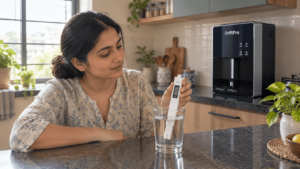
While not always visible, a rise in the Total Dissolved Solids (TDS) level of your purified water is a definite sign. You can check this with a simple handheld TDS meter. If the TDS reading of your RO water is creeping up, it means your RO membrane or pre-filters are no longer effectively removing dissolved impurities. For optimal clean water and pure water standards, regularly monitor your TDS levels.
Also Read: TDS For Drinking Water: How Much TDS Is Healthy In Water?
What to do after Replacing RO Filters?
After you’ve successfully installed your new RO water filter cartridges, you might think your job is done. However, there are a few important steps you should always take to ensure your system works perfectly and provides the best possible water quality. These steps are crucial for the long-term health of your water purifier and the purity of your drinking water.
1. Flush the System Thoroughly
The first and most vital step after any filter replacement is to flush the entire RO system. New carbon filters, in particular, can release small amounts of carbon dust into the water initially. If you don’t flush this out, it can clog the delicate RO membrane, shortening its lifespan and affecting water purification.
To flush, open the RO faucet and let the water run continuously for at least 20-30 minutes, or until the water runs clear and any initial cloudiness disappears. This process also helps remove air from the lines, ensuring a steady flow. You’ll likely discard several gallons of water during this step, but it’s essential for optimal performance and pure drinking water.
Also Read: Is RO Water Good For Your Health? Find Out All The Answers!
2. Check for Leaks
Once the system is flushed, carefully inspect all connections and fittings where you replaced the RO water filter parts. Look for any signs of dripping or moisture. Even a small leak can cause significant water damage over time. Tighten any loose connections gently, but avoid overtightening, which can crack fittings. This quick check helps protect your home and ensures your water purifier operates without issues, giving you confidence in your clean water supply.
Also Read: 6 Benefits Of RO Water Purifiers for Your Home In Bangalore
Which Filter is Better, RO or UV?
Choosing between an RO (Reverse Osmosis) and a UV (Ultraviolet) water purifier depends largely on the specific water quality in your area. Both technologies are excellent for water purification, but they target different types of contaminants. Understanding their strengths helps you make the best decision for your home and ensure safe drinking water. You need to consider what challenges your water supply presents.
Understanding RO Water Purifiers
An RO system uses a semi-permeable membrane to remove a wide range of dissolved impurities. This includes heavy metals like lead and arsenic, salts, nitrates, and even some pesticides. If your water source has high levels of Total Dissolved Solids (TDS), which often indicates hard water or chemical contamination, an RO purifier is highly effective. It physically filters out these tiny particles, significantly improving the taste and odour of your water.
Understanding UV Water Purifiers
A UV water purifier, on the other hand, uses ultraviolet light to destroy harmful microorganisms. It zaps bacteria, viruses, and other pathogens by damaging their DNA, making them unable to reproduce and cause illness. UV purification is a chemical-free way to disinfect water, but it does not remove dissolved solids, chemicals, or improve the water’s taste if the issue isn’t biological. If your municipal water is generally clean but you worry about germs, a UV system is a strong choice for microbial purification.
Also Read: How To Calculate TDS for Drinking Water At Home
Which is Better for Your Water?
Ultimately, the “better” filter depends on your water analysis. If your water has high TDS, comes from a borewell, or has known chemical contamination, an RO system is usually recommended. If your water has low TDS but you are concerned about bacterial or viral presence (common in municipal supplies), a UV purifier is sufficient for disinfection. Often, for comprehensive water treatment and complete peace of mind, many modern purifiers combine both RO and UV technologies to tackle a broad spectrum of impurities.
Last-Minute Takeaway
Identifying the signs that indicate a need for RO water filter replacement is essential for your health and the longevity of your water purifier. Don’t ignore a strange taste or smell, a significant drop in water flow, or a sudden increase in your RO water’s TDS levels. These are clear signals that your RO filter cartridge has reached the end of its effective life. Regular filter replacement ensures you continue to receive the clean, safe, and great-tasting water you rely on.
Timely maintenance of your RO system guarantees optimal water quality and performance. If you’re looking for a convenient way to access reliable and advanced water treatment solutions without the hassle of ownership and maintenance worries, consider exploring RentoMojo’s collection. We offer a range of RO and RO+UV water purifiers for rent with flexible plans, ensuring you always have access to clean drinking water without the stress of managing filter changes yourself. Check out RentoMojo today!
Also Read: Should You Drink Borewell Water? Know Why You Should Purify!
Frequently Asked Questions
1. How do I know if my RO filter needs changing?
An RO water filter typically needs changing when you notice a change in water quality. Common signs include a decrease in water pressure, an unusual taste or odour, or cloudy water. Regularly monitoring the RO filter’s performance is crucial for safe drinking water.
2. What is the lifespan of an RO filter?
The lifespan of an RO water filter depends on several factors, including the type of filter, water quality, and usage frequency. The RO membrane itself can last 2-5 years. However, pre-filters and carbon filters, which protect the membrane, typically need to be replaced every 6-12 months to ensure optimal performance and extend the system’s overall life.
3. What happens if you don’t change your RO filters?
Neglecting to change your RO water filter can lead to several problems. The clogged filter loses its ability to remove contaminants effectively, resulting in poor-quality drinking water. This can also lead to a decrease in water flow, unpleasant taste and odour, and can eventually damage the entire RO system, leading to expensive repairs.
4. Why do water filters only last 6 months?
Your RO water filter typically lasts about six months because its filters, particularly the pre-filters, become clogged with contaminants like sediment, chlorine, and other organic matter.
5. Do RO filters need maintenance?
Yes, RO water filters need maintenance to ensure they continue to provide clean, safe drinking water. Regular maintenance involves replacing the sediment, carbon, and RO membranes at recommended intervals.
6. When should I upgrade my current water purifier to a smart model?
You should upgrade to a smart water purifier when your current unit needs frequent filter changes, cannot track water quality, or lacks real-time alerts. A smart model monitors TDS, pH, and filter life automatically, ensuring your family always gets safe and healthy drinking water. It’s ideal if you want convenience, app control, and long-term reliability at home.