

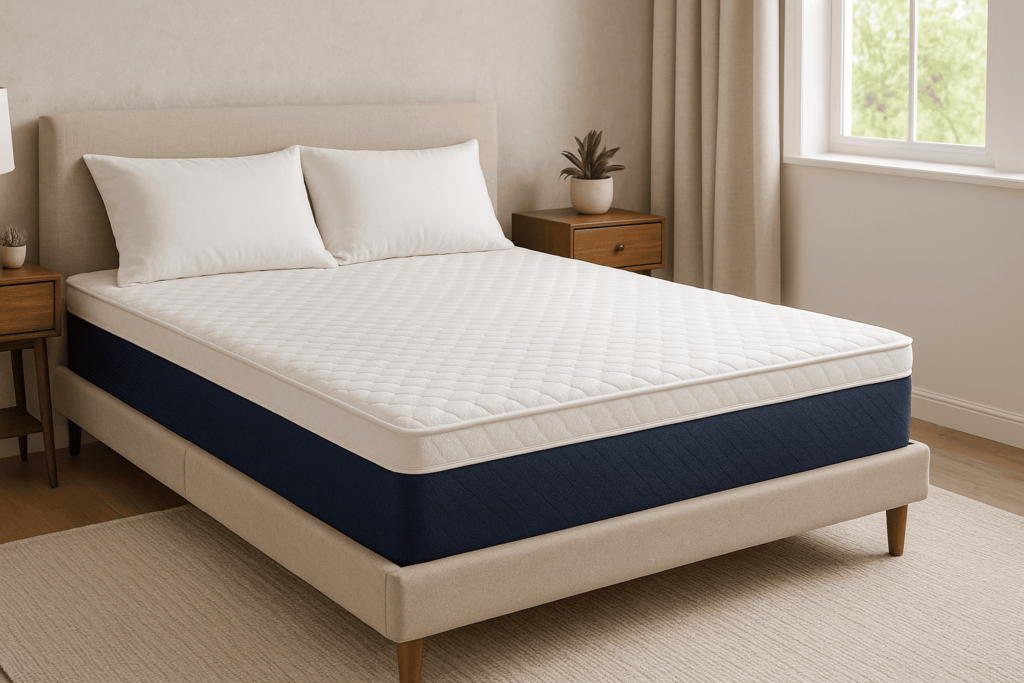
The modern memory foam mattress is fast becoming a popular choice in Indian households, changing the way people sleep. We hear the name often, but what exactly makes this type of bed so special? Its secret lies in the unique material developed originally by NASA scientists. This revolutionary material is viscoelastic, meaning it has both liquid-like flow and elastic bounce. Memory foam for a mattress is therefore capable of moulding perfectly to your body’s shape. Many people wonder if a foam bed mattress is right for them. We explore what this material is, how it works, its main features, the upsides, and beyond.
Also Read: Which Mattress is Good for Health? Benefits Explained!
What is a Memory Foam Mattress?
A memory foam mattress is not a regular foam bed. It is made from a special material called viscoelastic polyurethane foam. The word ‘viscoelastic’ simply means the material has two qualities: it acts like a thick liquid (viscous) and also has some stretch (elastic). This unique combination lets the foam of the mattress slowly take the shape of whatever presses against it.
This is how memory foam for mattresses works: when you lie down, the material reacts to your body heat and weight. It softens up and moulds perfectly around your curves, giving you a custom-made support system. When you move or get up, the memory foam mattress gradually returns to its original flat shape. Traditional foam, on the other hand, is much bouncier and springs back instantly, offering a more general, rather than conforming, kind of support.
Different Types of Memory Foam Mattresses
Not all memory foam mattress products are the same. Manufacturers use different techniques and materials to change the feel and performance of the original viscoelastic material. This results in various types of foam to suit different needs. Understanding these differences helps you choose the right foam for mattress comfort and support.
1. Traditional Memory Foam
This is the original design. It excels at pressure relief because the foam uses your body heat to soften and conform perfectly to your shape. However, this type of memory foam for mattresses sometimes traps heat, making the sleeper feel warm during the night.
2. Gel-Infused Memory Foam
To counter the heat issue of traditional foam, manufacturers blend the memory foam mattress material with cooling gel beads or swirls. The gel draws heat away from your body, offering a cooler sleep experience. This foam also improves airflow within the mattress structure.
Also Read: King vs Queen Mattress: Find the Right Mattress Size Here
3. Plant-Based Memory Foam
This version replaces some of the petroleum-based chemicals in the memory foam for mattresses with natural, plant-based oils. This makes it a more eco-friendly option. It often feels lighter and less dense than traditional foam, which helps reduce heat retention and gives it a slightly quicker response time.
4. Hybrid Memory Foam Mattresses
A hybrid design combines the conforming layer of memory foam with a base of traditional innerspring coils. The coils provide familiar bounce and stronger edge support, while the foam for the mattress offers superior pressure-point relief. This gives you the best of both worlds: support from coils and comfort from foam.
Major Benefits of a Memory Foam Mattress to Consider
The unique properties of viscoelastic material mean a memory foam mattress offers several distinct advantages over traditional spring or ordinary foam beds. These benefits focus primarily on enhancing comfort, providing superior support, and promoting a better quality of sleep, which is important for your overall health.
1. Customised Body Support
A key benefit of a memory foam mattress is its ability to adapt perfectly to your individual body shape. When you lie down, the foam softens and conforms to your exact contours, especially around the heavier parts like your hips and shoulders. This provides truly customised support, unlike the flat, general support offered by a regular foam mattress.
2. Excellent Pressure Relief
The conforming nature of the memory foam mattress helps distribute your body weight evenly across the entire sleeping surface. This significantly reduces pressure points that often lead to pain and discomfort, particularly in the shoulders, hips, and knees. This feature makes it highly beneficial for side sleepers and anyone suffering from aches.
3. Isolation of Movement
One of the most appreciated benefits is motion isolation. If you share a bed, the memory foam in the mattress absorbs movement right where it happens. This means if your partner shifts or gets up during the night, you will barely feel it on your side. This ensures a much more undisturbed and restful sleep for both individuals.
4. Relief for Back and Joint Pain
Because the memory foam mattress provides continuous, customised support along your spine, it helps maintain your body’s natural alignment. This proper support reduces strain on muscles and ligaments, helping to alleviate chronic back pain and stiffness in the joints. The support the foam for the mattress gives can greatly improve morning comfort.
Who Should Use a Memory Foam Mattress?
A memory foam mattress offers specific advantages that make it an excellent choice for certain sleepers. Its unique conforming material is particularly suited to people with particular support needs or those looking to solve common sleep disturbances.
1. Side Sleepers
If you sleep on your side, your body weight rests heavily on your shoulder and hip. The contouring ability of the memory foam for mattresses provides superb pressure relief by sinking in just enough at these points. This keeps your spine correctly aligned and prevents the discomfort often felt from firmer mattresses.
2. People with Joint and Back Pain
The customised support for a memory foam mattress is highly beneficial if you suffer from chronic aches. By cradling the body and spreading weight evenly, the memory foam mattress reduces stress on painful joints and promotes a neutral spinal position. This can lead to a noticeable reduction in morning stiffness and pain.
3. Those Who Need Motion Isolation
For individuals who share their bed, the excellent motion isolation feature is a major benefit. The memory foam absorbs movement on one side, stopping it from travelling across the surface. This means you will not feel your partner shifting position, which ensures a more peaceful, undisturbed night’s sleep.
Who Should Be Cautious?
While great for many, a memory foam mattress is not ideal for everyone. If you live in a very hot climate or sweat heavily, be cautious of traditional types, as they can retain heat. Also, those who prefer a lot of ‘bounce’ or a very firm feel might find a foam bed mattress too soft and hugging.
Also Read: Different Types of Mattresses Explained – Find Your Best Fit
Memory Foam Mattress vs Other Mattresses
When comparing a memory foam mattress to other common types, the main difference lies in the feel and response. Here are a few things you should consider before investing in a memory foam mattress.
Memory Foam vs Innerspring
Traditional innerspring mattresses use steel coils, giving them a springy, bouncy feel with high motion transfer. The memory foam mattress, by contrast, absorbs movement completely, offering superior motion isolation, but it provides a “hugging” or “sinking in” feeling rather than bounce.
Memory Foam vs Latex
Latex is another popular foam for mattress material, often sourced from rubber trees. Unlike the slow-response, conforming feel of memory foam mattresses, latex is instantly responsive and much bouncier. Latex mattresses are often firmer, more durable, and naturally cooler than conventional memory foam. The best choice depends on whether you prefer to feel “in” the mattress (memory foam) or “on top” of it (latex).
| Feature | Memory Foam | Latex | Innerspring | Hybrid |
| Comfort & Pressure Relief | Excellent | Very Good | Moderate | Very Good |
| Cooling | Average | Excellent | Good | Good |
| Durability | 7–10 years | 8–12 years | 5–8 years | 8–10 years |
| Motion Isolation | Excellent | Good | Poor | Very Good |
Also Read: Top 5 Furniture Rental Companies: Save This Comprehensive List!
The memory foam mattress is unique because of its body-conforming viscoelastic material. This special foam for mattresses adapts exactly to your shape, offering customised support and superb pressure relief to key points on the body. That ability to cradle the body has made the memory foam for mattresses a popular modern choice across Indian homes. By understanding how this revolutionary material works, you can appreciate why it provides such a distinct and comfortable way to sleep, changing the nighttime experience for many people!
Frequently Asked Questions
1. Is a memory foam mattress safe for toddlers?
It’s generally not recommended. Memory foam can be too soft for toddlers, posing a risk of suffocation or hindering their developing spines. Additionally, some memory foam contains chemicals that off-gas, which can be a concern for a child’s health. Firmer options like natural latex or coir are safer alternatives.
2. Why are people no longer buying memory foam mattresses?
While memory foam offers great contouring, many consumers are moving away from it due to issues like heat retention, “off-gassing” of chemicals, and the feeling of being “stuck” in the mattress. People are now opting for cooler, more supportive alternatives like latex or hybrid mattresses.
3. What are the negatives of memory foam?
Memory foam can retain body heat, making it uncomfortable for hot sleepers, especially in India’s climate. It can also be heavier than other mattress types and may have an initial chemical odour, known as off-gassing, upon unboxing.
4. How long does a memory foam mattress last?
A quality memory foam mattress typically lasts between 7 to 10 years. Its lifespan depends on the foam’s density, how well it’s maintained, and the sleeper’s weight. Regular rotation and using a mattress protector can help extend its life.
5. What is the best thickness for a memory foam mattress?
The best thickness is typically 10-12 inches, providing a good balance of comfort and support for most adults. Heavier individuals or side sleepers may prefer a thicker mattress (12-14+ inches) for better pressure relief and durability, while a thinner mattress (6-8 inches) is often suitable for children or lighter individuals.