

As the monsoon approaches, many think of waterproofing their homes. Some think of preventing mould in their furniture. But how many of us think of safeguarding our water purifiers from setbacks? You might often forget this, but it’s key for clean drinking water during the rainy season. Especially since monsoon brings more humidity and dirt! If you ignore monsoon water purifier maintenance, you could end up with dirty water and expensive repairs. From regularly cleaning and running check-ups, there is a lot to do. If you are clueless about maintaining your water purifier, here are a few things you can do at home. Let’s take a look below!
Also Read: 9 Benefits Of Renting An RO Water Purifier For Home
Water Purifier Maintenance: Tips to Follow at Home
The monsoon season demands extra attention for your water purifier’s health. Taking a few simple steps at home can significantly improve its longevity and performance, ensuring you always have safe drinking water. These DIY RO purifier maintenance tips are easy to follow and crucial for preventing monsoon-related issues. You can focus on these tasks to keep your water purifier running smoothly and efficiently throughout the rainy months.
| Task | Frequency |
|---|---|
| Exterior wipe-down | Monthly |
| Tank sanitizing | 2–3 times/year |
| Sediment/Carbon filter change | Every 6–12 months |
| RO membrane servicing | Annually |
| Professional check-up | Annually in monsoon |
1. Clean the Outside of Your Purifier
Your RO water purifier is often in the kitchen, where it can get dusty or greasy. During monsoon, humidity can make dirt stick more easily.
- Wipe it down regularly: Use a soft, damp cloth to wipe the outside of your water purifier. Do this at least once a week, or more often if it looks dirty. This simple step keeps it looking good and prevents dust from getting inside.
- Avoid harsh chemicals: Don’t use strong cleaning sprays or abrasive cleaners. These can damage the plastic body or leave residues that might affect water quality. Stick to mild soap and water if needed.
- Check for dampness: During monsoon, keep an eye out for any moisture around the purifier or on its surface. Wipe it dry immediately to prevent mould growth and protect electrical parts.
2. Check for Leaks in the Water Purifier
Leaks are a common problem that can waste water and damage your surroundings. They can also mean your purifier isn’t working right.
- Inspect pipes and connections: Look closely at all the pipes connecting to and from your water purifier. Check the joints and connections for any drips or wet spots. Pay special attention to the input and output pipes.
- Look under the unit: Sometimes leaks can be hidden underneath the purifier. Place a dry cloth or paper towel under the unit overnight to see if it gets wet.
- Act quickly on leaks: If you find a leak, try to tighten the connection carefully. If it continues, it’s best to call a professional for water purifier repair. Small leaks can become big problems if ignored.
Also Read: Can You Reuse RO Waste Water? 6 Ways To Use Reject RO Water!
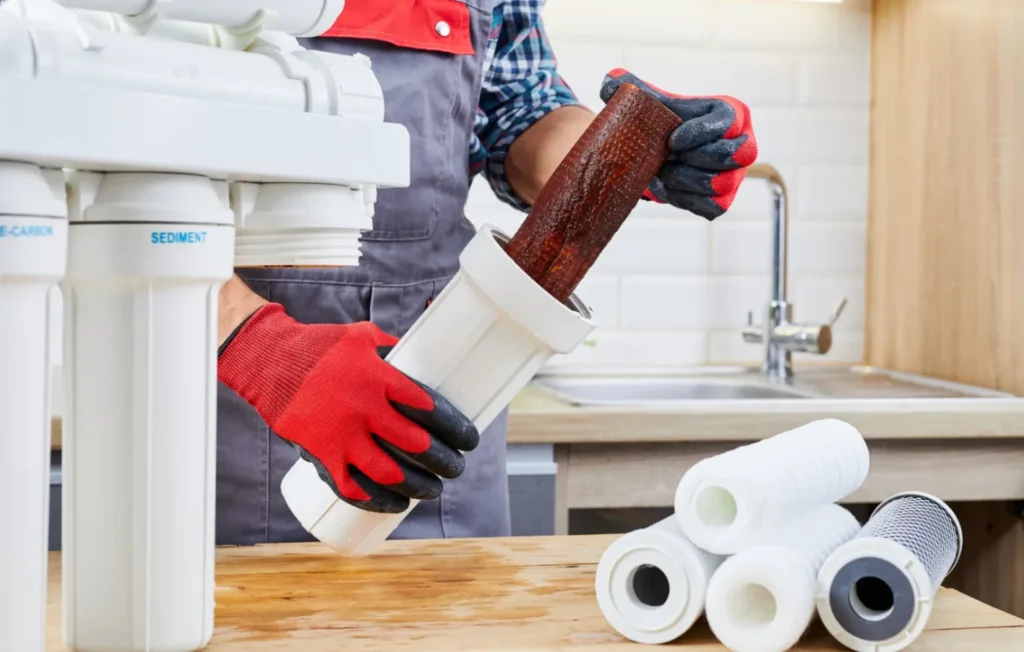
3. Clean or Replace Pre-Filters
Most water purifiers have a pre-filter, often outside the main unit. This filter removes larger dirt particles, sand, and sediment before water enters the main purification stages.
- Why it’s important: During monsoon, raw water often has more mud and silt. This means your pre-filter works harder and gets clogged faster. A clogged pre-filter reduces water flow and puts strain on other filters.
- How to clean: If your pre-filter is washable, follow the manufacturer’s instructions. Usually, you can open the housing, remove the filter, and rinse it under running water until clean.
- When to replace: If your pre-filter is a disposable type, or if cleaning doesn’t improve water flow, you need to replace it. A good rule of thumb is every 3-6 months, but during monsoon, you might need to do it more often. Reduced water flow or cloudy water from the faucet are signs it needs attention.
Also Read: How To Choose The Best Water Purifier For Home In Delhi
4. Sanitise the Water Tank
Even though your water purifier makes clean water, the storage tank inside can still become a breeding ground for bacteria over time, especially in humid conditions.
- Empty and drain: Once every few months, or more often during monsoon, empty the storage tank completely. Most purifiers have a drain plug or a way to empty the tank.
- Use a mild disinfectant: Some manufacturers provide specific sanitising tablets or liquids. If not, you can use a very dilute solution of food-grade hydrogen peroxide or white vinegar. Swirl it around inside the tank.
- Rinse thoroughly: After sanitising, rinse the tank multiple times with fresh, purified water to remove any traces of the cleaning solution. This step is crucial before you start using the purified water again.
- Prevent slime build-up: Regular sanitisation prevents the formation of a slimy layer inside the tank, which can affect water taste and hygiene. This is a key part of water purifier hygiene.
Also Read: TDS For Drinking Water: How Much TDS Is Healthy In Water?
5. Monitor Filter Performance
Your water purifier has several filters (sediment, carbon, RO membrane, UV lamp, etc.). Each plays a vital role.
- Check water flow: A noticeable drop in water flow from your purifier can be a sign that filters are getting clogged. The RO membrane maintenance is especially critical here.
- Taste and smell of water: If the purified water starts to taste strange or smell bad, it’s a strong indicator that one or more filters, particularly the carbon filter, need replacement. This is a clear sign for filter replacement.
- Indicator lights: Many modern purifiers have indicator lights that signal when a filter needs changing or if there’s an error. Pay attention to these alerts. Don’t ignore them.
- Schedule replacements: Keep track of when you last replaced your filters. Mark it on a calendar or set a reminder. Follow the manufacturer’s recommendations for the filter change schedule. Don’t wait until the water quality drops significantly.
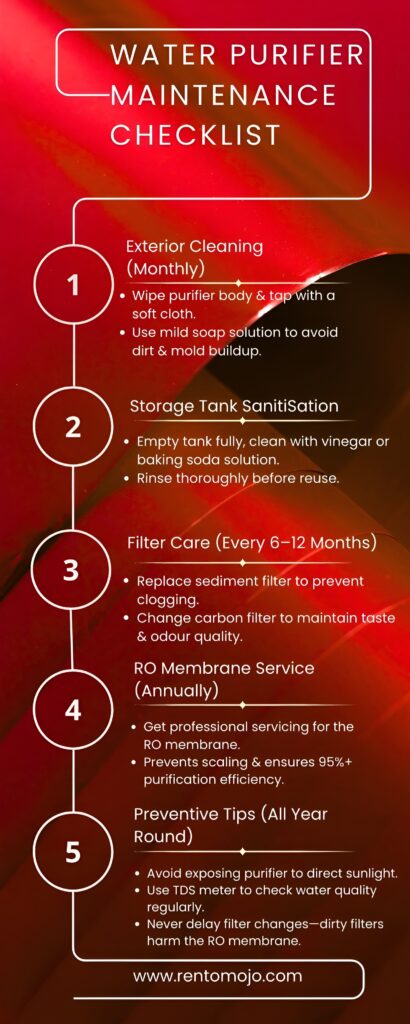
Quick Guide to Water Purifier Maintenance in Monsoon
6. Protect from Power Fluctuations
Monsoon often brings power cuts and voltage fluctuations, which can harm your electronic appliances, including your water purifier.
- Use a voltage stabiliser: This is a wise investment. A voltage stabiliser protects your purifier from sudden voltage spikes or drops, extending its life and preventing damage to its electrical components, like the UV lamp or pump.
- Unplug during lightning: If there’s a thunderstorm with lightning, it’s a good practice to unplug your water purifier to protect it from electrical surges.
- Check wiring: Ensure that the power outlet and wiring are in good condition. Loose connections can also cause problems.
7. Schedule Professional Servicing
While you can do many things at home, some water purifier service tasks require a trained technician.
- Annual check-up: Even if your purifier seems to be working fine, schedule a professional water purifier service at least once a year. They can check the RO membrane’s health, test water quality, and perform deep cleaning that you can’t do at home.
- Complex issues: If you notice persistent low water pressure, strange noises, continuous draining of water, or if the water quality doesn’t seem right even after your home checks, call a professional. They have the right tools and expertise for water purifier repair.
- RO membrane cleaning: The RO membrane is the heart of many purifiers. It’s delicate and needs careful handling. A technician can backwash or chemically clean it if possible, or replace it if needed. This is key for RO purifier maintenance.
Investing in an Annual Maintenance Contract (AMC) is one of the smartest ways to manage your water purifier. In India, AMC plans usually cost between ₹800–₹1200 per year, depending on the brand and model. These contracts typically cover filter replacements, RO membrane checks, tank sanitisation, and professional servicing. The biggest benefit of subscribing to a plan is peace of mind—you don’t have to remember schedules or worry about sudden repair costs. Regular servicing through AMC also ensures better water quality and extends the life of your purifier.
However, for many households, handling AMC costs separately can still feel like an added burden. This is where renting a purifier becomes more convenient. With RentoMojo’s water purifier rentals, you pay a simple monthly fee starting at just ₹459. The rental includes annual maintenance and easy upgrades. That means you don’t need to worry about hidden charges or separate AMC renewals—everything is covered in one affordable plan.
Also Read: Is RO Water Good For Your Health? Find Out All The Answers!
How Often to Service RO Purifier in India
Regular servicing is the key to keeping your RO purifier in good shape. When you skip water purifier maintenance, filters get clogged, the RO membrane wears out faster, and the quality of drinking water goes down. To avoid this, follow these simple water purifier cleaning tips that work well throughout the year, especially during the monsoon season.
Most experts suggest a basic cleaning every month. Wipe the outer body and tap to prevent dust and mold. Every two to three months, sanitise the storage tank with a mild cleaning solution like vinegar or baking soda. This prevents odor and bacterial growth.
Your sediment and carbon filters should be replaced once every 6–12 months, depending on water quality in your area. If these are not changed on time, your RO membrane will get damaged. The RO membrane itself usually needs servicing or replacement once a year. For monsoon RO purifier maintenance, schedule at least one professional service visit. High humidity and water contamination during rains make purifiers more prone to clogging and bacterial growth.
By following these water purifier maintenance tips, you can ensure your system continues to provide safe, purified water for your family throughout the monsoon and beyond. Regular water filter upkeep not only guarantees healthy water but also saves you money in the long run by preventing costly breakdowns and extending the life of your appliance. You can rent a water purifier from RentoMojo and leave the worries to us – we offer free repairs and annual maintenance. So, visit RentoMojo today!
Frequently Asked Questions
1. How to maintain the RO water purifier?
Regular water purifier maintenance is crucial for ensuring your RO system continues to provide clean and safe drinking water. This typically involves the timely replacement of filters and membranes, along with periodic professional servicing to check for leaks and proper functioning.
2. How to maintain a water filter?
Regular water purifier maintenance involves periodically cleaning the external parts, replacing filters as recommended by the manufacturer, and scheduling professional servicing for deeper checks and component replacement to prevent contamination and system breakdowns.
3. Do water purifiers need maintenance?
Yes, water purifiers definitely need regular maintenance to ensure they keep providing drinking water. Over time, filters get clogged with impurities, reducing their effectiveness and potentially allowing contaminants to pass through.
4. Is RO water good for skin?
While RO water is highly purified and free from many contaminants, its extremely low mineral content might not be inherently beneficial for skin health compared to water with some natural minerals.
5. Can I drink RO water every day?
Yes, you can generally drink RO water every day. While RO filtration effectively removes harmful contaminants, it also removes beneficial minerals, so ensuring these are re-added is key for long-term daily consumption.
6. Do hybrid water purifiers require more maintenance?
No, hybrid water purifiers generally do not require more maintenance. Their dual technology, often combining RO with UV or UF, ensures efficient purification while maintaining standard service schedules similar to single-technology purifiers. You’ll need to replace filters and membranes periodically.