

If how to get rid of bed bugs has been in your search history, then it means that problem has escalated very far. These small, wingless insects are unwanted roommates, and the real solution for their elimination is actually three practical steps: deep cleaning and heat, calling in a professional if the bugs are adamant and replacing the heavily infested mattress or wooden furniture.
India’s warm and humid weather conditions provide these bed bugs a thriving breeding environment, and they spread quietly. These bloodsuckers feed on human blood and hide in hard spots like sleeping cushions, collapsed clothing, bed edges, tiny wooden joints, cotton mattresses and wall cracks and survive for months without feeding; a quick spray can never solve this stubborn problem.
This guide will walk you through homemade remedies for bed bugs and how to remove bed bugs from home permanently without wasting any money or time.
Before diving into treatments, understanding how to get rid of bed bugs starts with knowing how they sneak inside in the first place.
Also Read: How To Clean Mattress At Home: From Brown Stains To Pee Smell
Why Do Bed Bugs Appear at Home, and What Are the Early Signs?
It is assumed that bed bugs thrive in dirty and unhygienic environments, whereas it’s the opposite. You will find bedbugs in clean, warm environments. In cities like Bangalore, due to dense population and warm climate, apartment buildings, housing societies and multi-unit residential complexes are the most vulnerable to bedbug infestation.
These tiny wingless insects hitchhike their way across shared walls, ceilings, floors, plumbing and electrical conduits, creating multiple pathways for the rest of the bedbugs. If a flat gets infested, then neighbouring flats above, below and beside that infested unit might be at risk of infestation and treating one apartment is not going to eliminate the problem.
In monsoon season, they seek a secure, warm and damp area, and your kitchens and homes provide them with the perfect spot, along with food in the dustbins as the outside food sources become unreachable due to the stormy and blustery season.
They easily travel and spread through luggage after travel, second-hand furniture or mattresses, moving into new places and shared laundry or storage areas.
Fun fact: Bedbugs are attracted to carbon dioxide that we breathe out while sleeping.
Signs of Bed Bugs
Despite being small insects, bedbugs do leave clues behind, and you have to be vigilant about where to look around your house. The earlier you detect them, the faster you can stop the infestation from spreading.
Here are some signs of bed bug infestation:
- Itchy, red bite marks in a line.
- Tiny, red-coloured blood spots on bedsheets.
- Tiny black faecal spots on the mattress.
- Skin sheds of the bedbugs as they grow.
- Small and cream coloured eggs in the seams of the mattress and upholstered furniture, and cracks in walls and furniture joints.
- A musty smell in case of severe infestation.
If you come across such signs, call for a professional inspection and get your mattress piping, corners of the bed, behind the headboard, and sofa edges inspected thoroughly.
How to Prevent Bed Bugs?
Prevention is always better than cure, and when it comes to bedbugs, it’s the strongest defence. Below are some steps on how to prevent bed bugs at home and from bringing them home after travelling:
-
Travelling Habits
- Make sure to inspect the hotel room before unpacking and check the mattress seams, headboard, and luggage rack for any signs of bedbugs. Keep your luggage on a hard, tiled surface until the inspection.
- On return, unpack the clothes directly into the washing machine rather than dumping them on your bed. Make sure that all the travel clothes are washed and dried on the highest heat setting the fabric can handle.
- Don’t forget to vacuum your suitcases and bags after the trip, seal them in a plastic bag and store them all in a garage away from your bedroom or living hall.
2. Buying Secondhand Furniture and Clothes
- Make sure that all seams, joints, and screw holes are inspected and examined with a flashlight in every second-hand piece of furniture, mattress, couch, or wooden frame that you bring home to avoid bedbug infestation. The secondhand furniture must be treated before bringing it into your home.
- Thrifting is sustainable, but make sure that you heat-treat the thrifted clothing, curtains or plush items in a hot dryer for 30 minutes, as high heat kills all life stages of bedbugs.
3. Everyday Home Barriers and Maintenance
- You can cover your mattress with bed bug-proof encasements. They trap the hidden bedbugs and remove the stitched seams where new ones are likely to hide.
- You can also install plastic bed bug interceptor cups under the legs of the bed frames. Make sure that the bed is a few inches away from the wall and the blankets do not touch the floor.
- Declutter your bedroom and keep the clothes, boxes and bags off the floor and away from the bed so that bedbugs have no hiding spots where you sleep.
- You can use caulk to seal the cracks and gaps in the wall, headboard, loose wallpaper, and electrical outlets.
- Even though natural repellents like essential oils won’t stop an infestation, they may help deter the bedbugs. Use scents like lavender, peppermint, tea tree and eucalyptus.
- Make sure to report at an early stage about any suspected bedbug infestation in your apartment to your society manager.
- Always ensure that the wooden furniture is dry in the monsoon, as a damp environment is where bedbugs thrive.
How to Rid Your House of Bed Bugs: A 3-Step Plan
The key to eliminating them is treating where they live, where they hide, and every spot they travel.
Step 1: Homemade Remedies for Bed Bugs
Here are the homemade remedies for bed bugs that work:
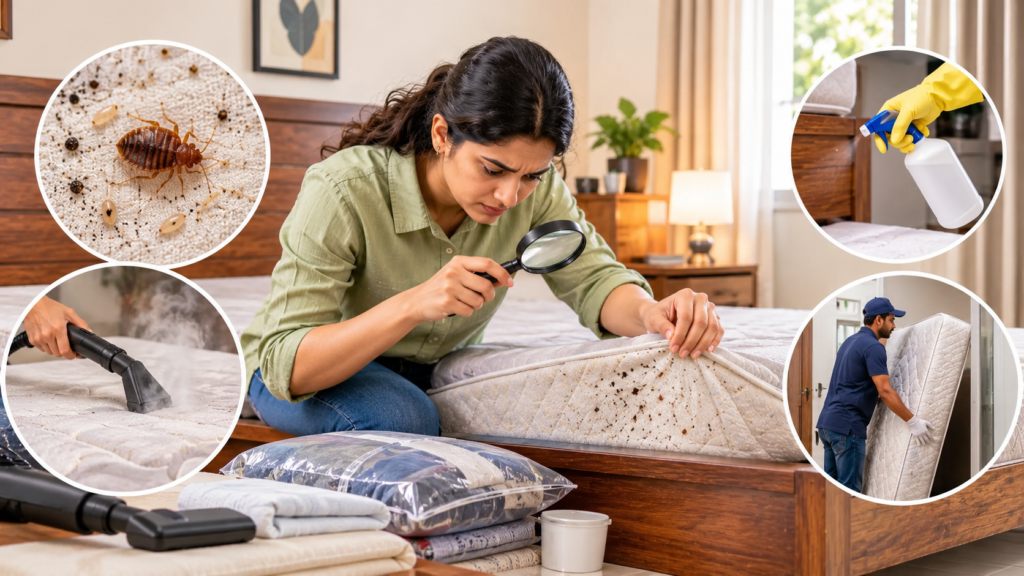
- Heat: Heat destroys all life stages of bed bugs, including the eggs. Make sure to wash all the clothing, curtains, bedding, and removable upholstery in hot water at the highest heat settings and dry them. Sun drying helps for pillows, but isn’t always consistent.
- Steam: Steam clean the headboards, mattress, bed frame, baseboard and other furniture and set the steam temperature at 55 °C. Make sure the airflow is not too forceful, as it may scatter the bedbugs.
- Vacuum, then dispose outside: Vacuum each and every corner of your house, including the furniture, mattress, carpets, frame joints and floor edges. Empty the vacuum bag and dispose of it outside.
- Diatomaceous earth: Check the label for food grade. Apply a thin layer in wall cracks, around bed legs, furniture joints, but never on the mattress surface. It acts like a microscopic sandpaper that dehydrates the adults and the newly hatched bugs within 7-10 days.
- Tea tree, lavender and neem oils act as a repellent but don’t really kill the bed bugs.
If simple home steps are not enough on their own, the next stage of how to get rid of bed bugs is bringing in trained experts.
Step 2: How to Remove Bed Bugs from Home Permanently with Pest Control?
To remove bed bugs from home permanently with pest control, pair multi-visit professional treatment with thorough home preparation and long-term barriers. Relying on a single spray or DIY effort often fails because bed bug eggs can survive initial treatment and bugs hide deep inside furniture, wall voids, and wiring.
- Prepare before technicians arrive: Declutter your room, pull the furniture away from walls (as advised by your provider), and wash, steam and dry bedding, curtains, and clothes on high heat so treatments can eliminate the bed bugs.
- Combine heat and targeted sprays: A mixed approach called IPM, where the pest control companies pair high heat or steam with long-lasting sprays or powders to catch the stubborn bed bugs that have grown resistant to regular chemicals.
- Coordinate in apartments: If you live in an apartment or shared building, coordinate with neighbours and your housing society, since treating one unit often fails when bugs travel through shared walls or utility lines.
- Complete all follow-up visits: Schedule and complete follow-up appointments—typically spaced a few weeks apart—to eliminate newly hatched bugs and verify treatment success under your service agreement.
- Add lasting barriers afterwards: Cover the mattresses and box springs with bed bug-proof encasements, use bed leg interceptors, seal cracks in walls and baseboards, and keep a weekly check.
Step 3: Replace Badly Infested Beds, Mattresses and Furniture
Not every piece of furniture or mattress can be saved from the khatmal infestation. Even after following the preventive measures diligently along with multiple professional pest control visits, these bedbugs get settled deep into the joints of the furniture or crawl right inside the seams of the bedding, making them beyond repair.
It’s always recommended to first throw or dispose of the infested mattress or furniture and make sure that you cover the infested article to avoid spreading the infestation, as these bed bugs are hitchhikers.
A bed bug infestation already drains your time and wallet, especially after you have paid for all the laundry, cleaning or pest control. Now buying new furniture or a mattress can be an expensive affair, and this is where renting a bed or mattress from Rentomojo can take away the worry of a lump-sum payment. Every mattress is thoroughly cleaned and disinfected before delivery, and you can rent a bed, mattress or furniture by choosing a monthly subscription with free repair, maintenance and relocation.
Also Read: Is Renting Furniture Better Than Buying Second-Hand?
Conclusion
The entire process of dealing with bed bug infestation can test your patience and your wallet. The secret to how to get rid of bed bugs from home permanently is acting upon it early and following all the preventive measures that we covered in this guide, right from your daily habits to calling for a pest control to letting go of the infested and ruined mattress or furniture. Stay consistent with how to prevent bed bugs, and your home will be free from infestation.
Frequently Asked Questions
1. How to get rid of khatmal at home?
You can get rid of khatmal at home by following these 3 steps: clean and heat-treat early, call a pest control if they return and replace the ruined items.
2. Can bed bugs go away on their own?
No, they are hitchhikers that spread very rapidly and can also survive for months without feeding. They feed on human blood and are attracted to the carbon dioxide that we breathe out.
3. Do bed bugs spread diseases?
Bed bugs do not spread any disease, but they do irritate your skin, causing itching, rashes, and allergies, and those bites can break your skin and lead to infections.
4. Does diatomaceous earth kill bed bugs?
Yes, but not right away. Food-grade diatomaceous earth can kill adult and young bed bugs by drying them out within 7-10 days.
5. Why do bed bugs increase during the monsoon?
Bed bugs thrive in warm and damp environments, and heavy rains push pests indoors into warm, dark bedrooms, wooden box beds and laundry piles where they breed faster.