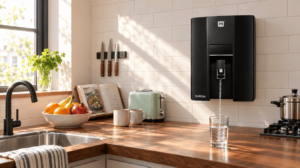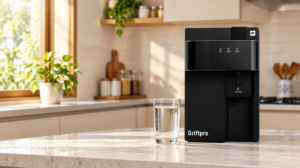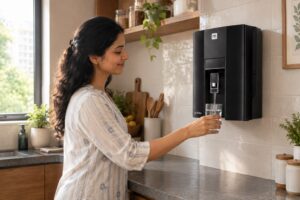



Choosing the perfect water filter for home can feel like a big decision, especially with so many options available. Among the most popular and effective technologies are RO (Reverse Osmosis) and UV (Ultraviolet) water purifiers. While both aim to provide you with safe, clean drinking water, they achieve this through very different methods and excel at removing different types of contaminants. Understanding the fundamental differences between an RO and UV water purifier is key to selecting the best system for your household’s needs. To know more, let’s take a look below!
How Does an RO Water System Work?
An RO water filter is a special kind of filter that uses a clever process to purify water. Instead of just blocking large particles, it actually pushes water through a very, very fine membrane. Imagine a screen with holes so tiny, only water molecules can fit through! This is what makes an RO system so effective at cleaning your water.
The RO Water Purification Process: A Step-by-Step Look
So, how does an RO water purification process happen? It’s like water going on a journey through several stages, getting cleaner at each one.
Step 1: Pre-filtration – Getting Ready
Before the water even reaches the special RO membrane, it goes through a few “pre-filters.” These are like the bouncers at a club, stopping the big, obvious stuff first. They usually include:
- Sediment Filter: This filter catches larger particles like sand, dirt, and rust. Imagine a fine mesh net catching all the chunky bits.
- Carbon Filter: This filter removes things that cause bad tastes and smells, like chlorine (which is often used to treat tap water). It’s like a sponge soaking up all the unpleasant flavours.
These pre-filters protect the main RO membrane, making sure it doesn’t get clogged up too quickly.
Also Read: How To Choose The Best Water Purifier For Home In Delhi
Step 2: The Magic of Reverse Osmosis – The Main Event
Now for the star of the show: the RO water system (Reverse Osmosis system) itself. The water, now much cleaner thanks to the pre-filters, is pushed at high pressure against a semi-permeable membrane.
Normally, in nature, water with fewer dissolved things would try to move towards water with more dissolved things (this is called osmosis). But in reverse osmosis, we force the water to go the other way! We apply pressure to push the water away from the side with more impurities and through the tiny holes in the membrane.
Only pure water molecules can squeeze through these tiny holes. Everything else – like dissolved salts, minerals, chemicals, and even tiny bacteria and viruses – gets left behind. It’s like trying to push a basketball through a tiny keyhole; it just won’t fit!
Step 3: Draining Away the Impurities
The water that doesn’t pass through the membrane, along with all the impurities that were left behind, gets flushed away down a drain. This “RO waste” water is concentrated with all the unwanted stuff that was removed from your drinking water.
Step 4: Post-filtration – The Final Polish
After passing through the RO membrane, the super-clean water usually goes through one more filter, often another carbon filter. This is like a final polish, ensuring the water tastes as fresh and pure as possible, ready for you to drink.
Step 5: Storage and Dispensing
Finally, the purified water is stored in a clean tank, ready for you to use whenever you need it. When you turn on your tap for filtered water, it comes straight from this tank.
So, the next time you pour a glass of water from your water filter for home, you’ll know exactly how that RO water purification process worked its magic! It’s a fantastic way to ensure your family has access to clean, safe, and delicious drinking water.
Also Read: 6 Benefits Of RO Water Purifiers for Your Home In Bangalore
How Does a UV Water Filter Work?
Ever wondered how some water filters manage to get rid of tiny germs without using any chemicals? Well, that’s the magic of a UV water filter, a fantastic option for a water filter for home. Let’s break down how this clever technology works to make your drinking water safe and clean.
What is UV Light?
Think of sunlight. It has different types of light, some we can see (like the colours of the rainbow) and some we can’t. Ultraviolet (UV) light is one of those invisible types. While too much UV light from the sun can give you a sunburn, a specific type of UV light, called UV-C, is really good at stopping harmful germs.
The Science Behind UV Water Purification
A UV water purifier uses a special lamp that produces this powerful UV-C light. Imagine your water flowing through a clear chamber. As the water passes by the UV lamp, the UV-C light shines directly on it.
Now, here’s what to remember: when the UV-C light hits tiny organisms like bacteria, viruses, and other microbes in the water, it doesn’t kill them in the traditional sense. Instead, it messes with their DNA (their genetic blueprint). Think of it like scrambling the instructions they need to grow, reproduce, and cause sickness. Once their DNA is scrambled, these germs become inactive and can no longer harm you. They’re essentially neutralised!
Also Read: 9 Benefits Of Renting An RO Water Purifier For Home
Difference between RO and UV Filter for Home
When you’re looking for the best water filter for home, you’ll often come across two main types: RO (Reverse Osmosis) and UV (Ultraviolet) filters. Both are excellent at making your water safer to drink, but they work in different ways and tackle different kinds of impurities. Let’s explore the key differences between an RO vs UV water filter for home.
What Each Filter Removes (and Doesn’t Remove)
This is where the biggest difference lies when considering an RO vs UV water purifier.
What a UV Filter Removes
A UV filter is your go-to for making sure your water is free from harmful microorganisms. It’s incredibly effective at eliminating:
- Bacteria
- Viruses
- Cysts (like Giardia and Cryptosporidium)
However, a UV filter does not remove:
- Dissolved solids (like salts, minerals)
- Chemicals (like chlorine, pesticides)
- Sediment (dirt, rust)
- Bad tastes or odours not caused by microorganisms
What an RO Filter Removes
An RO filter is much more comprehensive in what it can remove. It’s highly effective against:
- Dissolved salts and minerals (which cause hard water)
- Heavy metals (like lead, mercury, arsenic)
- Chemical contaminants (like chlorine, fluoride, nitrates, pesticides)
- Bacteria and viruses (though it’s not its primary function, it does remove most of them due to the pore size)
- Sediment and turbidity
What an RO filter might remove that some find a concern are beneficial minerals, as it purifies water so thoroughly.
When to Choose Which Filter
Deciding between an RO and UV filter depends on the quality of your incoming water and your main concerns.
Choose a UV Water Purifier If:
- Your primary concern is dealing with bacteria, viruses, and other microorganisms.
- Your water already has a low level of dissolved solids and chemicals.
- You want a filter that uses no chemicals and produces no wastewater.
- You want to retain the natural minerals in your water.
Choose an RO Water Purifier If:
- Your water has a high level of dissolved solids, making it taste salty or metallic.
- You are concerned about heavy metals, chemicals, or other non-biological contaminants.
- You want the purest possible water, free from a wide range of impurities.
- You don’t mind some wastewater being produced in the purification process.
Also Read: Can You Reuse RO Waste Water? 6 Ways To to Use Reject Water!
Can RO and UV Work Together?
Yes! For many homes, the best solution for a comprehensive water filter for home is a system that combines both technologies. Many advanced RO systems now include a UV lamp as a final stage of purification. This way, you get the extensive purification of RO, removing dissolved impurities, along with the powerful disinfection of UV light, ensuring your water is safe from even the smallest microorganisms. This combination offers the best of both worlds, providing truly clean and safe drinking water.
In conclusion, choosing the right water filter for home between an RO and a UV system boils down to understanding your specific water quality challenges. If your main concern is removing a wide range of dissolved impurities like salts, chemicals, and heavy metals, an RO water purifier for home is likely your best bet. However, if your water is already low in these impurities but you need to be sure it’s free from harmful bacteria and viruses, a UV water purifier is a fantastic, chemical-free option.
Also Read: Is RO Water Good For Your Health? Find Out All The Answers!
Ultimately, for the most comprehensive protection and peace of mind, many modern RO vs UV water purifier systems now combine both technologies. This ensures you get the benefits of thorough impurity removal alongside powerful microbial disinfection, giving you truly safe and clean drinking water for your home.
Frequently Asked Questions
1. Is UV filtration better than reverse osmosis?
UV filtration is not inherently better than reverse osmosis; each has distinct uses. UV kills bacteria and viruses but does not remove dissolved solids or chemicals. Reverse osmosis removes most contaminants, including dissolved salts and heavy metals, making it ideal for hard or chemically contaminated water.
2. Should we boil UV-filtered water?
Boiling UV-filtered water is not necessary if your UV system is functioning properly, as UV treatment effectively kills bacteria and viruses, making water safe to drink. Boiling is only required during specific advisories or if there are doubts about the UV system’s performance or power supply.
3. How to check the TDS of water at home?
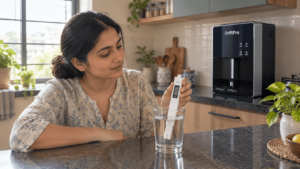
To check TDS at home, use a digital TDS meter: turn it on, immerse the probes in your water sample, and wait for the reading to stabilise—results appear instantly in parts per million (ppm). Alternatively, you can use filter paper and a scale, but this method is slower and less convenient.
4. What is good TDS for RO water?
A good TDS level for RO water is typically between 10 to 50 ppm (parts per million), as this range indicates effective filtration and removal of most dissolved solids. While not zero, this level is safe and healthy for drinking, reflecting optimal performance of your reverse osmosis system.
5. Is 9.5 pH water good?
Water with a pH of 9.5 is considered highly alkaline and generally safe for most people in the short term, but it may taste bitter and is not necessary for health. The EPA and WHO recommend drinking water with a pH between 6.5 and 8.5 for optimal quality and safety.
6. Can I drink 10 TDS water?
Drinking water with a TDS of 10 ppm is technically safe, but it may taste flat and lack beneficial minerals. While purified water is often defined as having less than 10 ppm TDS, such low mineral content is not ideal for regular consumption—moderate TDS offers better taste and health benefits.
7. Is RO water good for the kidneys?
RO water is generally safe for kidney health as it removes harmful contaminants like heavy metals and excess minerals, reducing the kidneys’ workload. However, RO water is low in essential minerals, so long-term use without remineralisation may not be ideal for everyone, especially those with specific health conditions.
8. What is the healthiest water to drink?
The healthiest water to drink is free from pathogens and contaminants, yet contains essential minerals like calcium and magnesium. Spring water and clean artesian water are considered top choices because they naturally provide these nutrients. Alkaline and mineral waters also offer benefits, but safety and mineral content are key.