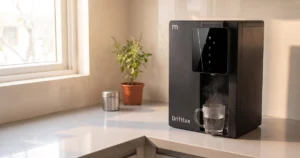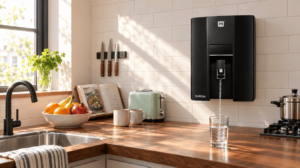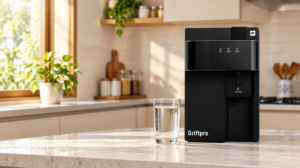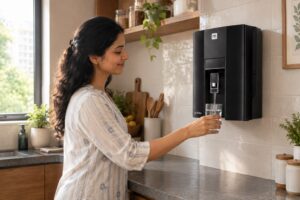


Do you get borewell water in your neighbourhood? Many homes, especially outside big cities, rely on borewells for their daily water. It feels great to have your water source, right? But here’s the thing: borewell water, while easily available, isn’t always clean and safe to drink. It can have hidden stuff that you can’t see or taste, but that can make you sick. This is why borewell water purification is so important. Here, we will talk about the main reasons why it’s important to purify bore well water. We will also add the best water purifier for borewell water so that drinking water is never a problem in your household. Let’s take a look below!
Also Read: TDS For Drinking Water: How Much TDS Is Healthy In Water?
Is Borewell Water Safe for Drinking?
You might think borewell water, coming from deep underground, is naturally pure. But is borewell water safe for drinking directly? The short answer is usually no. Even if it looks clear and tastes fine, it can hide many harmful things you can’t see or smell. Borewell water often contains various contaminants due to natural factors and human activities. These can include:
1. High TDS (Total Dissolved Solids): This refers to dissolved salts, minerals, and metals. High TDS levels can make water taste salty or bitter and can be harmful in the long run.
2. Harmful Chemicals: Pesticides, industrial waste, and natural elements like arsenic and fluoride can seep into groundwater, posing serious health risks. Prolonged exposure to these can lead to chronic conditions.
3. Microorganisms: Bacteria, viruses, and parasites are common in untreated water. These can cause waterborne diseases like diarrhoea, cholera, and typhoid.
4. Heavy Metals: Lead, mercury, and other heavy metals from industrial pollution can contaminate borewell water, which are toxic and especially dangerous for children.
To ensure your family’s safety, borewell water purification is crucial. Relying on an effective water purifier for borewell water is the best way to make it safe for drinking. For homes using borewell water, a good borewell water filter for the home is an investment in health.
Also Read: Best Water Purifiers In Mumbai: How To Choose One For Home
Can You Purify Borewell Water for Drinking?
You can purify borewell water to make it safe for drinking! Considering the common impurities found in borewell water, especially in areas like Bangalore with high TDS levels and potential contamination, purification is not just possible, but highly recommended. Here’s how you can purify borewell water for drinking, and the types of water purifiers for borewell water that are most effective:
Effective Borewell Water Purification Methods
To address the diverse contaminants often found in borewell water, a multi-stage water purifier for borewell water is typically required. Here are the key technologies:
1. Reverse Osmosis (RO) Water Purifier
RO uses a semi-permeable membrane to remove dissolved solids, heavy metals, pesticides, and many chemical contaminants from water. Water is forced through this fine membrane, leaving impurities behind.
Borewell water often has high TDS (sometimes exceeding 1000 ppm in Bangalore, far above the acceptable 300 ppm), and an RO water purifier for home is usually the primary treatment method. It significantly reduces the hardness and chemical load, making the water safer and better-tasting.
2. Ultraviolet (UV) Purification
UV light attacks the DNA of bacteria, viruses, and other microorganisms, inactivating them so they can’t reproduce or cause illness.
While RO removes many physical and chemical impurities, UV acts as a powerful disinfection stage. It ensures that any remaining microbes are neutralised, making the water microbiologically safe for consumption.
3. Ultrafiltration (UF) Water Filter
UF membranes have larger pores than RO membranes. They effectively remove suspended solids, colloids, and larger microorganisms like bacteria and cysts, without removing dissolved minerals.
UF can be used as a pre-filter to reduce the load on the RO membrane, extending its life. It can also serve as a standalone filter if the TDS levels are low and the primary concern is microbial contamination and suspended particles. Many advanced water purifiers for borewell water systems combine RO, UV, and UF for comprehensive protection.
Also Read: How To Choose The Best Water Purifier For Home In Delhi
Why Purify Borewell Water: 5 Reasons to Keep in Mind
For many homes, especially in cities like Bangalore, where reliance on groundwater is high, borewells are a primary water source. However, assuming this water is naturally pure can be a costly mistake for your health. Here are 5 crucial reasons why you must purify borewell water:
1. High Levels of Total Dissolved Solids (TDS)
Borewell water, by its nature, often has a high concentration of dissolved minerals, salts, and metals. In Bangalore, for instance, TDS levels in borewell water can often exceed 500 parts per million (ppm), sometimes even reaching over 1000 ppm, which is significantly higher than the acceptable limit for drinking water (generally up to 300 ppm).
High TDS doesn’t just affect the taste; it can indicate the presence of harmful substances and contribute to health issues over time. An RO water purifier for borewell water is highly effective at reducing these high TDS levels, making the water safe and palatable.
2. Presence of Harmful Chemicals and Heavy Metals
Groundwater can easily get contaminated by a range of chemical pollutants. This includes industrial waste, agricultural pesticides, and even naturally occurring elements like arsenic and fluoride, which can be found in excess in various parts of Karnataka, including Bangalore.
Long-term consumption of water with these contaminants can lead to severe health problems, including neurological damage and various chronic diseases. A comprehensive water purifier for borewell water is designed to tackle these invisible threats.
3. Risk of Microbial Contamination
Even if your borewell is deep, it’s not immune to microscopic invaders. Bacteria, viruses, and parasites from sewage leakage, septic tanks, or agricultural runoff can seep into the groundwater. These pathogens are a major cause of waterborne diseases like cholera, typhoid, and dysentery, leading to immediate health emergencies.
The best water purifier for borewell water will include UV (Ultraviolet) filtration to effectively kill these harmful microorganisms, ensuring your drinking water is microbiologically safe.
Also Read: A Guide To Finding The Best Water Installation Service
4. Impact on Appliances and Plumbing
High TDS and mineral content, commonly found in borewell water, lead to “hard water.” This causes scaling and mineral buildup in your pipes, water heaters, and other home appliances like washing machines and dishwashers.
This buildup reduces efficiency, increases energy consumption, and significantly shortens the lifespan of your appliances, leading to costly repairs and replacements. Using a borewell water filter for home not only protects your family’s health but also your valuable household investments.
5. Unpleasant Taste, Odour, and Appearance
While not directly a health risk, borewell water can often have a metallic or salty taste, an earthy or rotten egg smell (due to sulfur or decaying organic matter), or appear cloudy or discoloured. These aesthetic issues make it unappealing to drink, discouraging proper hydration. A good water purifier for a borewell water system improves the overall taste, odour, and clarity of the water, making it pleasant to consume and encouraging healthier drinking habits.
Also Read: 9 Benefits Of Renting An RO Water Purifier For Home
How to Reduce TDS in Borewell Water Naturally
Total Dissolved Solids (TDS) in borewell water refers to the concentration of inorganic salts and organic matter dissolved in it. High TDS levels are common in borewell water, especially in places, and can indicate the presence of minerals, salts, and even harmful chemicals or heavy metals. While a high TDS isn’t always harmful on its own, it often signals other underlying contamination issues and can make water taste unpleasant. Here’s a look at some natural concepts and their limitations for TDS reduction:
1. Boiling Water
Boiling water is excellent for killing bacteria and viruses, but it does not reduce TDS. As water evaporates during boiling, the dissolved solids are left behind, potentially increasing the concentration of TDS in the remaining water. So, while it disinfects, it won’t solve your high TDS problem.
2. Distillation
This involves boiling water and then collecting the condensed steam. Since only pure water turns into steam, the dissolved solids are left behind in the boiling vessel. This method is highly effective at reducing TDS and making water extremely pure. However, it’s a very slow, energy-intensive process and not practical for providing large quantities of drinking water for a whole home. It also removes beneficial minerals, making the water completely demineralised.
3. Sedimentation and Filtration
Allowing water to sit and letting heavier particles settle or passing it through basic sand/gravel filters can remove suspended solids like dirt and rust. However, these methods do not remove dissolved solids, which are the core of the TDS problem.
Also Read: 6 Benefits Of RO Water Purifiers for Your Home In Bangalore
Relying on untreated borewell water puts your health at risk from invisible threats like harmful chemicals, heavy metals, and dangerous microorganisms. It can also lead to unpleasant taste and odour, and damage your home appliances over time. For comprehensive protection and peace of mind, investing in a robust water purifier for borewell water is not an option, but a necessity. Specifically, an RO water purifier for borewell water is often the most effective solution, as it excels at reducing high TDS, removing dissolved chemicals, and tackling heavy metals. If you are wondering how you can get a water purifier on rent, head over to RentoMojo. Check out our collection of water purifiers for rent!
Also Read: Best pH Level of Drinking Water: Is 9.5 Safe?
Frequently Asked Questions
1. Which water purifier is the best for borewell water?
For borewell water purification for home, a multi-stage RO+UV+UF+Mineralizer purifier like the KENT Grand+ or Livpure GLO Pro++ is considered among the best for effective purification and mineral balance.
2. How do you purify borewell water?
To purify borewell water, use a multi-stage RO water purifier if the TDS is above 300 ppm, or a UV purifier if it’s below 300 ppm, and always test your water first for contaminants.
3. Can we use RO for bore water?
Yes, you can use RO for bore water as it effectively removes dissolved minerals, heavy metals, bacteria, and other contaminants, making the water safe to drink.
4. How much TDS is in borewell water?
Borewell water usually has a TDS between 300 and 2000 ppm, but most commonly around 500 ppm or higher, making it hard and sometimes saline.
5. Is borewell water good for hair?
Borewell water is not good for hair because its high mineral content can make hair dry, rough, weak, and more prone to breakage and hair loss.